Magnetization Requirements for Permanent Magnet Motor Manufacturing
Permanent magnet motors have moved from a niche to the mainstream of industrial and consumer drives, and with that shift […]
Permanent magnet motors have moved from a niche to the mainstream of industrial and consumer drives, and with that shift […]
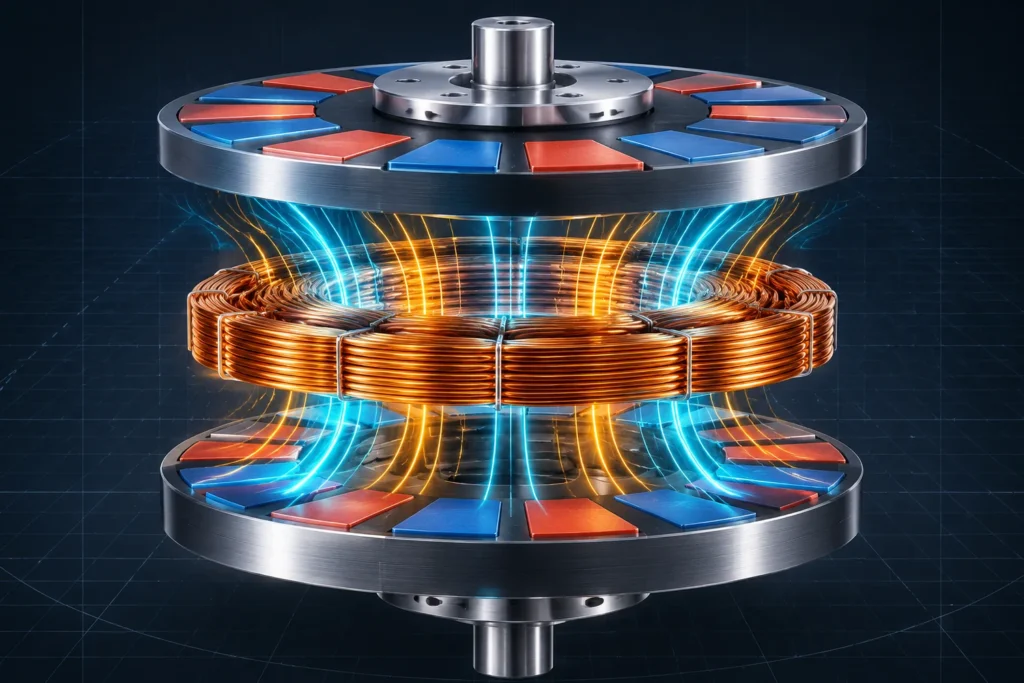
Yokeless dual-rotor or single-rotor double-stator: how air-gap tolerance, 2 to 4 mm sector magnets and bond-line strength decide which topology actually ships.
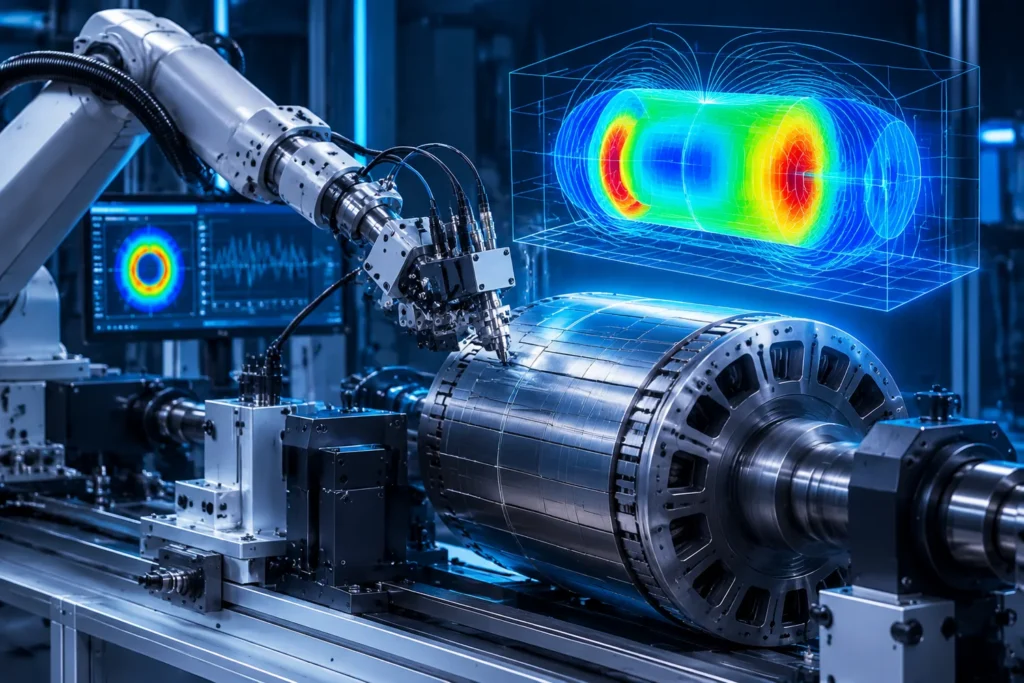
Single-probe scanning or Hall arrays: what each method measures, where the uncertainty comes from, and how pole asymmetry and flux THD predict NVH and torque ripple.
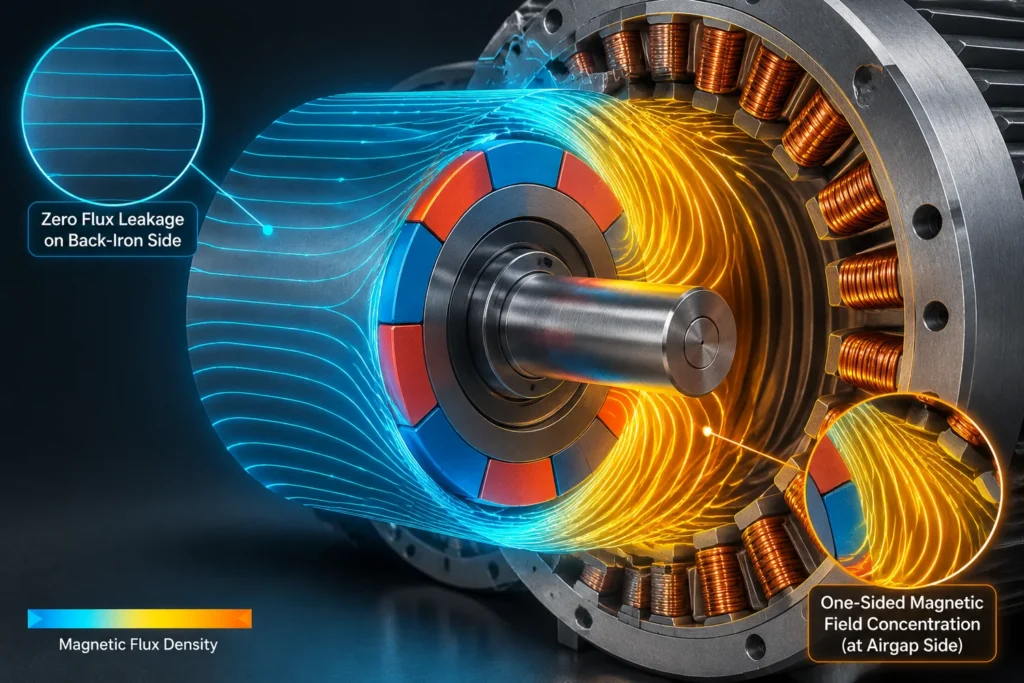
Why a Halbach rotor concentrates flux on one side, how segment count scales the fundamental, and what repulsive assembly forces do to bonding tolerance and retention.
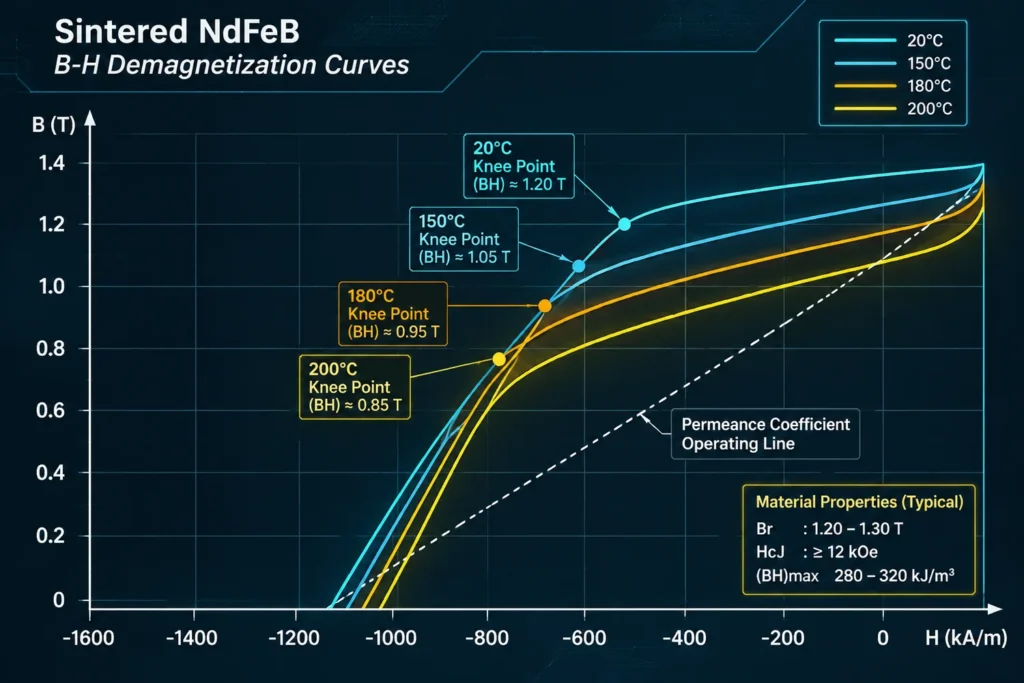
Why grade names do not answer the temperature question: Hcj, knee point, permeance coefficient and the demagnetization margin calculation for traction motors.
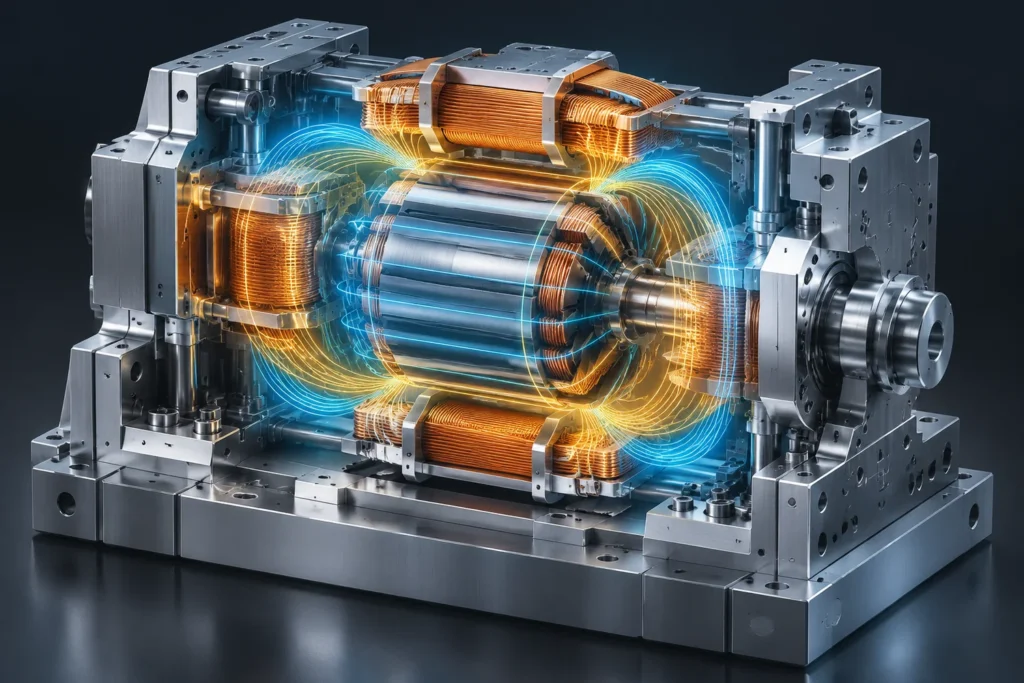
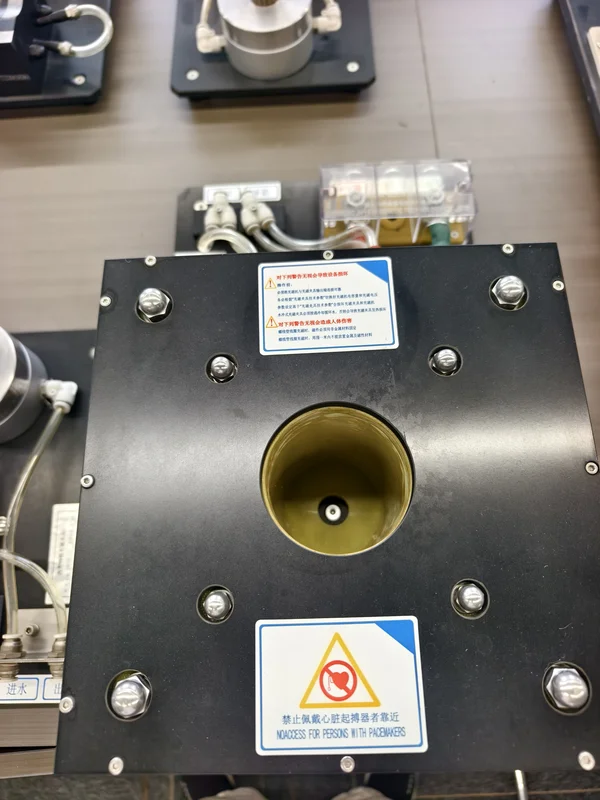
How post-assembly magnetization charges an EV rotor in one pulse, how magnetizing fixtures are designed against FEA, and how saturation is proven before shipment.
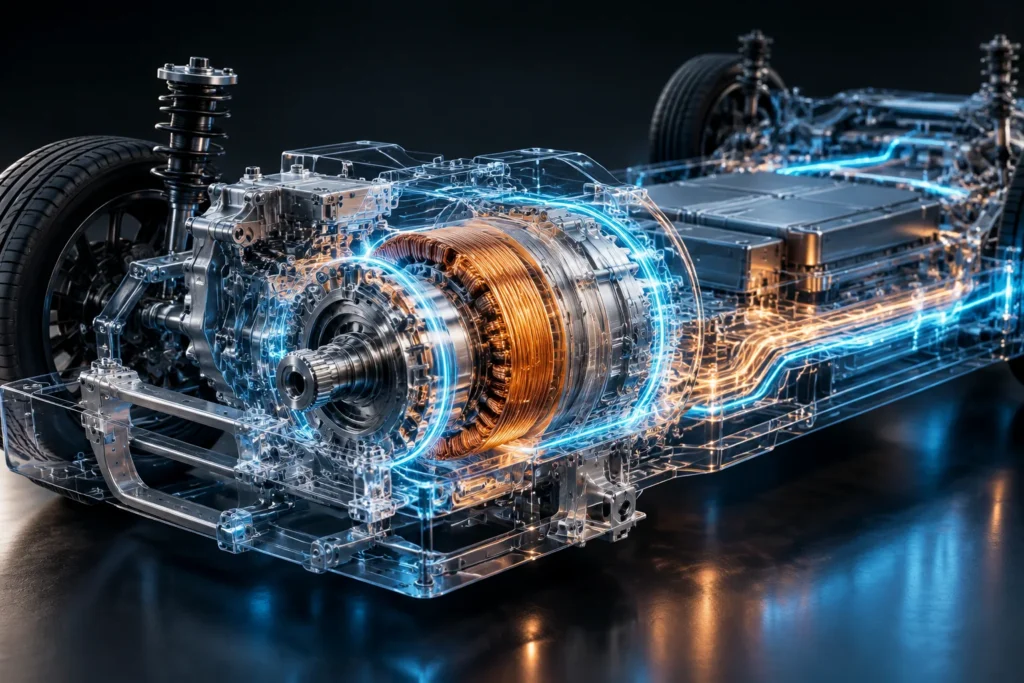
Brushed DC, BLDC, PMSM, induction, switched and synchronous reluctance, and axial flux: how the seven EV motor types differ, where each is used, and why.
A brushless DC (BLDC) motor is defined by the interaction between a rotor carrying permanent magnets and a stator carrying […]
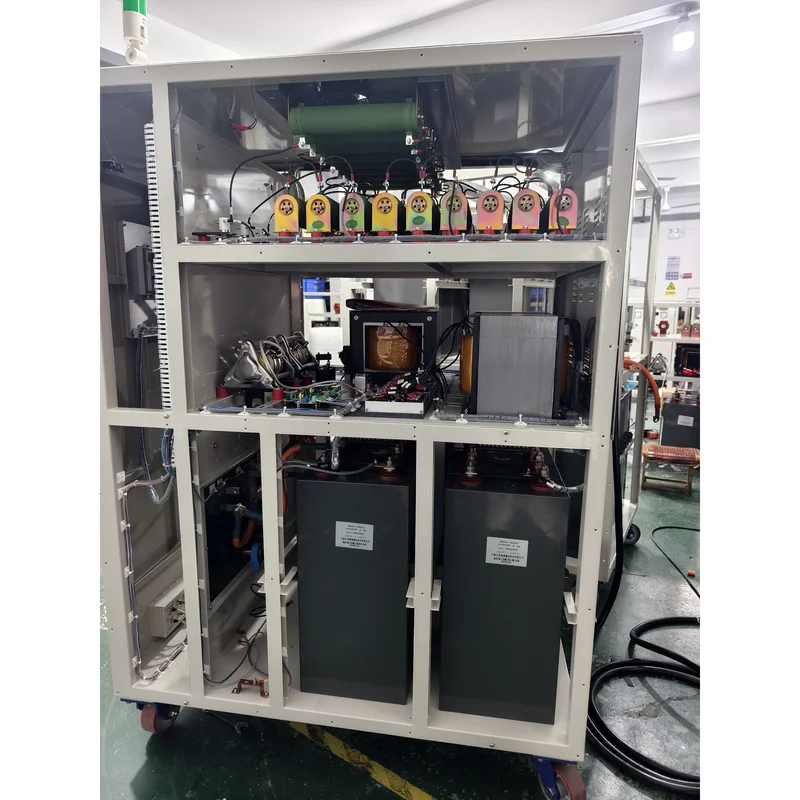
Three terms come up in almost every conversation about impulse magnetizers: charging voltage, stored energy and discharge current. They are […]
Permanent magnets reach their intended performance only after they are correctly magnetized. NdFeB (neodymium-iron-boron) and ferrite (ceramic) magnets are the […]