A brushless DC (BLDC) motor is defined by the interaction between a rotor carrying permanent magnets and a stator carrying windings. The stator can be wound and insulated with ordinary care, but the rotor only works if its magnets are magnetized in exactly the pattern the design assumes. Get the magnetization pattern wrong — the wrong number of poles, poles out of alignment, magnets only partly saturated — and the motor will run with reduced torque, higher losses, or unacceptable noise, even though every individual magnet is “magnetic.” Magnetizing the rotor is therefore a precision manufacturing step, not an afterthought, and it is where specialized solutions earn their place.
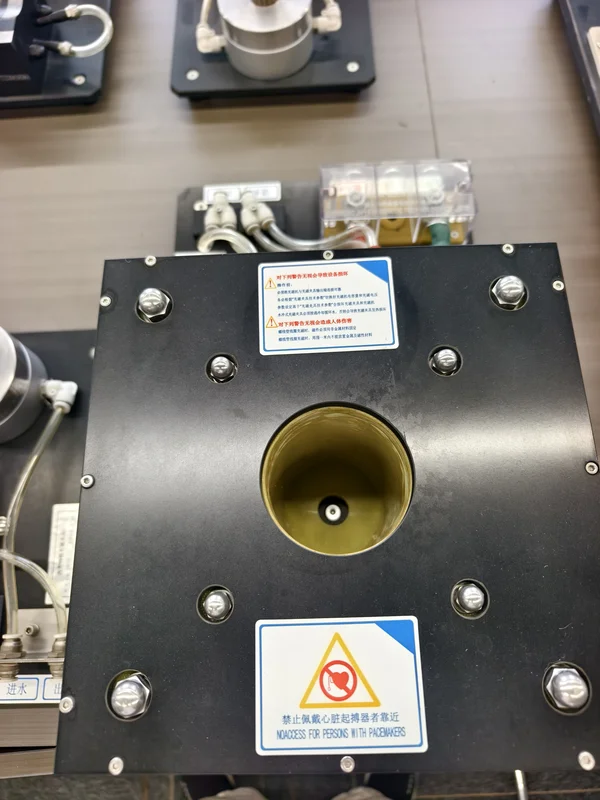
This article looks at what BLDC rotor magnetization involves, how multipole fixtures and impulse magnetizers are matched to it, and how the surrounding process is organized for consistent production. It describes the general approach rather than any single rotor, because the right solution depends on the motor.
Key takeaways
- The magnetization pattern is a design decision, and the equipment has to reproduce that decision faithfully.
- The fixture locates the rotor precisely so that every unit sees the same geometry.
- Automation contributes to quality in a specific way: it removes variation.
- Because rotor magnetization cannot be judged by eye, production setups pair the magnetizing station with flux measurement.
What Makes BLDC Rotor Magnetization Different
BLDC rotors introduce a combination of features that sets them apart from simple single-direction magnetization jobs.
- Multiple poles. The magnetization pattern must match the stator’s pole count. Instead of one north–south pair, the rotor often needs several alternating poles arranged around its circumference, each in the correct position and with the correct orientation.
- Tight pole pitch. As pole count rises, the distance between poles falls, so the fixture must deliver a sharply localized field rather than a broad one.
- Considerable material mass. A rotor can carry a substantial volume of magnet material. Driving that whole volume to saturation takes more delivered field than a small discrete magnet would.
- High-coercivity materials. The magnets used in motor rotors are frequently high-coercivity grades, which need a strong applied field to saturate.
- Assembly context. The rotor is usually magnetized as an assembly, so the fixture has to work in the space around the rotor shaft and any surrounding structure.
Matching the Magnetizing Pattern to the Motor
The magnetization pattern is a design decision, and the equipment has to reproduce that decision faithfully. The main dimensions of the decision are:
- Pole count and pitch — how many poles the rotor carries and how they are spaced.
- Orientation — whether the magnets are magnetized radially, parallel, or in some other direction relative to the rotor axis. Radial magnetization is common in motors, but the requirement flows from the motor’s electromagnetic design.
- Magnet placement — surface-mounted magnets are magnetized differently from magnets buried inside the rotor, because the fixture has to reach the magnet material through whatever surrounds it.
- Skew and shaping — some designs call for skewed or shaped magnetization to manage torque ripple and noise, which the fixture must reproduce.
Reproducing these faithfully is exactly what a purpose-built multipole fixture is for.
Multipole Fixtures and Impulse Magnetizers
The heart of a BLDC rotor magnetization solution is a multipole impulse magnetizers system paired with a fixture designed for the rotor. The impulse magnetizer stores energy and releases it as a brief, high-current pulse; the multipole fixture distributes that pulse into the pattern of poles the rotor needs, all in a single discharge.
The fixture is where the engineering lives. It locates the rotor precisely so that every unit sees the same geometry, defines the direction of magnetization, and concentrates the field on the magnet material while keeping it away from regions that must not be magnetized. A dedicated 3000V multipole magnetizer within the range illustrates how these systems are organized by design class so that the energy available matches the job. Because the fixture is rotor-specific, it is normally developed together with the magnetizing system rather than chosen from a catalog — an approach covered under custom magnetizing coils and fixtures.
A single pulse that produces all the poles at once is a major advantage for rotors. Magnetizing pole by pole would risk disturbing the poles already set, and it would be far slower. A multipole fixture sets the whole pattern in one controlled event.
Magnetizing the Rotor at the Right Stage
Where magnetization sits in the production sequence matters. Two common arrangements exist:
- Magnetize before assembly. Magnets are magnetized while they are separate, then assembled into the rotor. This can simplify fixture access, but handling magnetized parts introduces its own challenges, and assembly forces can disturb the pattern.
- Magnetize after assembly. The completed rotor — magnets already positioned — is magnetized in one operation. This avoids handling magnetized material and keeps the pattern aligned with the final geometry, but it requires a fixture that reaches the magnet material inside the assembled rotor.
Both approaches are used in practice, and the choice follows from the motor design and the production environment. What matters is that the magnetization step is planned as part of the sequence rather than squeezed in afterwards.
Automation, Throughput and Consistency
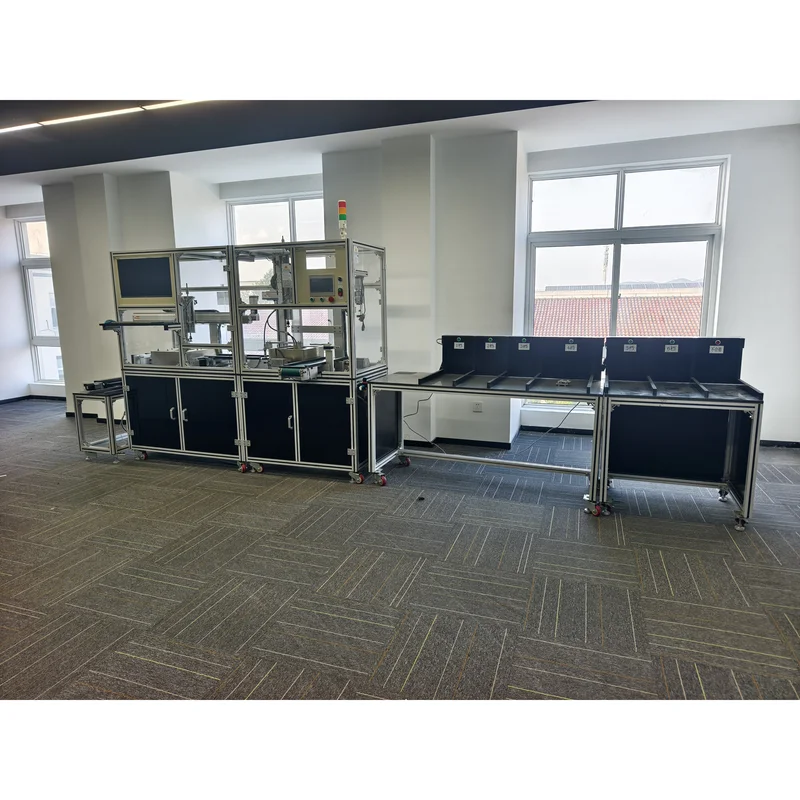
BLDC rotors are usually produced in volume, so the magnetization solution has to fit a production line rather than interrupt it. That is where automation earns its place. An automated magnetizing and testing system can take a rotor through magnetization and measurement in a repeatable sequence, with the part-present checks and interlocks that a manual station would rely on the operator to provide.
Automation contributes to quality in a specific way: it removes variation. The same rotor presented to the same fixture in the same position, magnetized by the same pulse, produces the same result. Over a long run, that consistency is what keeps motors performing alike.
Cooling underpins that consistency. Repeated pulsing accumulates heat in the coil and switching components, and a circuit that drifts in temperature can drift in behavior. An industrial water chiller keeps those components within their intended thermal conditions so that pulse behavior stays stable from the first rotor to the last.
Verifying Rotor Magnetization
Verification closes the loop. Because rotor magnetization cannot be judged by eye, production setups pair the magnetizing station with flux measurement. The JH-T500 digital fluxmeter confirms the flux a magnetized rotor actually carries, using six ranges, manual zeroing and drift adjustment, upper and lower limit settings with indicator-light outputs, and RS232 communication. Operators re-adjust drift after a range change, connect the signal line to COIL INPUT with the black and red conductors interchangeable, and keep readings within the instrument’s working limit. In an automated line, limit outputs can flag a rotor that falls outside its accepted range so it is held for review rather than passed downstream.
Building the Right Solution
A BLDC rotor magnetization solution is assembled from parts that have to fit together: a magnetizing power supply sized to the material and mass, a multipole fixture shaped to the rotor and its pole pattern, tooling that locates the part repeatably, cooling matched to the duty cycle, and a measurement chain that verifies the result. The solutions approach treats these as one system rather than as separate purchases, because changing any one of them changes the outcome of the rest.
FAQ
Can a single-pole magnetizer produce a multipole rotor?
It is not the usual approach. Setting poles one at a time risks disturbing poles already magnetized and is slower. A multipole fixture produces the whole pattern in one pulse, which is why it is the standard method for BLDC rotors.
Should the rotor be magnetized before or after assembly?
Both are possible and both are used. Magnetizing after assembly avoids handling magnetized parts and aligns the pattern with the final geometry, but it demands a fixture that reaches the magnets inside the assembled rotor. The right answer depends on the motor design and the production sequence.
Why do rotor magnetization jobs often need a purpose-built fixture?
Because the pole pattern, pole pitch, orientation and assembly context are all rotor-specific. A fixture that locates and magnetizes one rotor correctly will generally not suit a differently designed one, so fixtures are developed for the part.
How is a magnetized rotor checked?
By measuring its flux with an instrument such as the JH-T500 digital fluxmeter, and by comparing the reading against the established value for that rotor. In automated lines the instrument’s limit outputs can signal an out-of-range part.
Does magnetization affect motor performance?
Yes. The magnetization pattern determines the field the rotor presents to the stator. An incomplete or misaligned pattern reduces torque and efficiency and can raise noise and losses, which is why the step is controlled and verified rather than assumed.
Where to Start
BLDC rotor magnetization rewards careful planning: define the pole pattern and orientation from the motor design, choose a magnetizing platform that can deliver the required field, develop a fixture that reproduces the pattern on the actual rotor, and verify every unit. JHHS MAG builds multipole impulse magnetizers, custom fixtures and automated systems around exactly this sequence. To discuss a specific rotor, reach the team through the contact page.
Website: https://jhhsmag.com/
Email: sales001@jhhsmag.com
WhatsApp: +86 18868929496
Location: Ningbo, Zhejiang, China