When engineers compare axial versus radial magnetization — and, increasingly, multipole magnetization as a third option — the conversation usually starts with the part. But the choice of magnetization direction is not simply a property of the magnet. It is a decision that simultaneously fixes the field direction inside the workpiece, the geometry of the fixture that will magnetize it, and the way the result will be verified. JHHS MAG builds both the impulse magnetizing platforms and the magnetizing coils and fixtures that apply them, so this article approaches the three patterns from the fixture side as well as the part side.
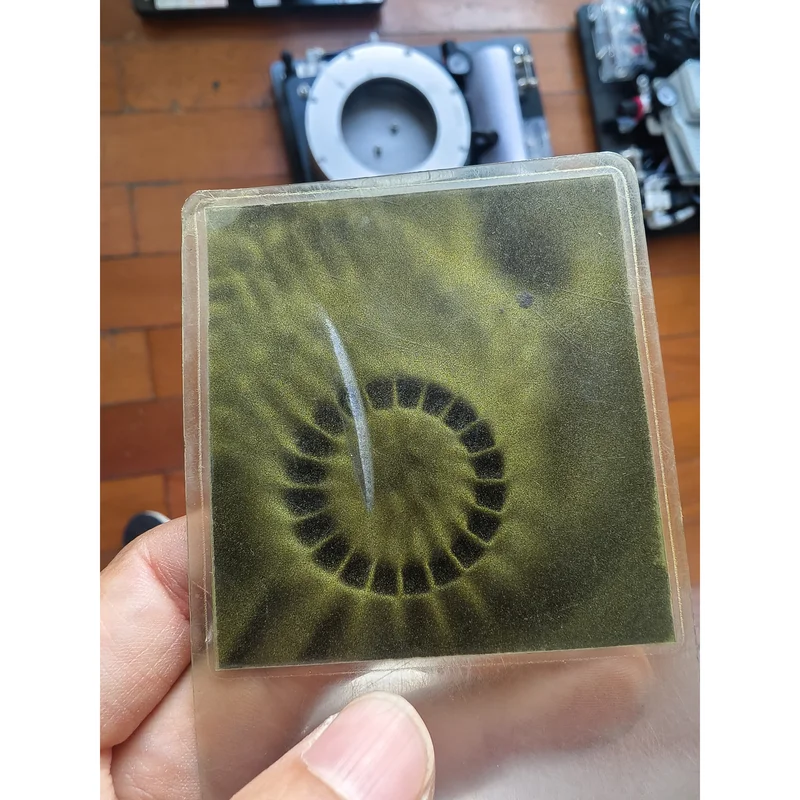
Magnetization Direction Is a Fixture Decision
A magnetizing fixture creates a field, and that field aligns the domains inside the workpiece along its direction. Change the direction of the field relative to the part and you change where the poles appear. That is the whole story of axial, radial, and multipole magnetization: three ways of orienting the same physical process.
It follows that the pattern cannot be chosen in isolation. Once the pattern is fixed, the coil arrangement, the pole pieces, the way the part is located, and the way it is removed from the fixture are all constrained. A part that must carry poles on its faces is a different fixture from a part that must carry poles around its circumference, which is a different fixture again from a part that must carry a ring of alternating poles.
Axial Magnetization
What it is. In axial magnetization, the field runs along the axis of the part, so the poles appear on the faces at either end of that axis — typically one pole on each flat face of a disc or ring.
Fixture implications. This is the simplest pattern mechanically. A coil whose own axis is aligned with the part axis produces a field along that axis, and the part is positioned so that the working zone of the coil surrounds the region to be magnetized. Because the geometry is straightforward, axial magnetization is often the pattern that first comes to mind when a part is designed.
Typical use. Axial patterns suit parts where the magnetic field is expected to emerge from a face — holding magnets, sensing arrangements where a face is presented to a target, and assemblies where the mating geometry is a flat surface.
Practical notes. The field distribution across the face depends on how the coil and any pole pieces shape it. A coil that is much larger than the part distributes the field differently from one that closely surrounds it, and the fixture must be designed so the desired region is fully saturated with alignment while the rest of the part is not unnecessarily affected.
Radial Magnetization
What it is. In radial magnetization, the field runs across the part rather than along it, so the poles appear on opposing sides of the outer or inner surface rather than on the end faces. In a ring, this means the field crosses the wall of the ring.
Fixture implications. Radial magnetization is harder to produce than axial magnetization. The coil has to drive the field through the wall of the part rather than along its easy axis, and the fixture must control where the field enters and where it leaves. Pole pieces, return paths, and structures that confine the field to the intended sector all become part of the design.
Typical use. Radial patterns appear in parts where the field must be presented to a surface that faces sideways — motor and actuator parts, some sensing arrangements, and assemblies where the working gap is at the circumference rather than at a face.
Practical notes. Uniformity is the recurring concern. A radial pattern that is stronger on one side of the part than the other will behave inconsistently in the final assembly, which is why fixture design for radial work pays close attention to the symmetry of the field path.
Multipole Magnetization
What it is. Multipole magnetization produces more than a single pair of poles on the same part. The poles are distributed around the part — commonly around the circumference of a ring or rotor — so that the part presents an alternating magnetic pattern rather than one field direction.
Fixture implications. Multipole work is a fixture problem before it is a power-supply problem. The fixture must create several field regions with the correct spacing and orientation, and keep them separated from one another. This normally means a coil or winding arrangement combined with pole structures placed around the part. The multipole impulse magnetizers are designed as the power platform for this class of work, and the fixture is developed around the pole arrangement the part requires.
Typical use. Multipole patterns are associated with parts that interact with a rotating field or with several sensing elements at once: rotors, encoder and sensor rings, and similar components. Motor manufacturing, automotive components, and high-volume production applications are common contexts.
Practical notes. Multipole patterns introduce two difficulties that single-direction patterns do not have. The first is pole definition: the boundaries between adjacent poles must be sharp enough for the application, which depends on the fixture’s ability to create localized fields. The second is consistency between poles: each pole should behave like its neighbours, which places strict demand on the mechanical accuracy of the fixture and on how the part is located in it.
How the Three Patterns Differ in Practice
The patterns differ along four axes that a specification should make explicit:
Field direction. Along the axis for axial work, across the part for radial work, and distributed around the part for multipole work.
Where poles appear. On the faces for axial, on opposing sides of a surface for radial, and in an alternating arrangement around the circumference for multipole.
Fixture complexity. Lowest for a simple axial coil, higher for radial work where the field path must be controlled, and highest for multipole work where several field regions must coexist.
Verification approach. A single-direction pattern is normally confirmed by measuring the flux of the part as a whole. A multipole pattern usually requires checking pole by pole as well, because the total flux does not reveal an imbalance between adjacent poles.
Fixture Design Is Where the Patterns Diverge
Because the three patterns share one physical principle, the differences between them are concentrated in the fixture. An axial fixture is largely a question of coil geometry and part positioning. A radial fixture adds control of the field path through the material. A multipole fixture adds the arrangement of several poles and the mechanical precision that keeps them consistent.
This is why a project is rarely served by choosing a pattern and then buying a standard tool. The pattern, the fixture, and the platform are specified together, and the customization process exists to work through exactly those interactions.
Verification and the Pattern
Magnetization is confirmed by measurement, and the measurement chain should be designed alongside the pattern. For single-direction patterns, the JH-T500 digital fluxmeter supports flux measurement across its six ranges, with the standard procedure of zeroing the reading with the magnet in the coil and then reading the flux after the magnet is withdrawn. Upper and lower limit settings with indicator output allow pass and fail to be judged at the bench.
For multipole parts, the same instrument is used to examine the pattern point by point where the application requires it. Measurement points are agreed as part of the process specification, because the definition of an acceptable multipole pattern is an application requirement rather than a general rule.
Choosing Between the Patterns
The pattern should follow from how the magnetized part will be used. If the field must emerge from a face, axial work is the natural fit. If the field must cross the body of the part and appear at a surface that faces sideways, radial work is the fit. If the part must interact with several field regions at once, multipole magnetization is the fit. The engineering work lies in translating that functional requirement into a fixture that produces the pattern repeatably, and in defining how the pattern will be measured. Where a heavier fixture or a larger working volume is involved, the platform is selected from the appropriate class — for example the high-capacity impulse magnetizers — but the pattern always comes first.
FAQ
Can one magnetizing machine produce axial, radial, and multipole patterns?
The impulse generator can serve all three, because the pattern is created by the fixture rather than by the machine. In practice, changing patterns means changing the fixture and the pulse settings for that fixture.
Is radial magnetization simply axial magnetization rotated?
Not quite. Rotating the part changes where the poles appear, but the field path through the material also changes, which changes how difficult the pattern is to produce and how the fixture must be built.
Why is multipole magnetization more difficult than a single-direction pattern?
Because several field regions must be created and kept distinct within the same part, and the poles must be consistent with one another. Both requirements place demands on the fixture rather than on the power supply alone.
How is a multipole pattern checked?
By measuring the flux of the part and, where the application requires it, by checking the individual poles across a defined set of measurement points.
Does the magnetization pattern affect which platform I should choose?
It influences the fixture, and the fixture influences the energy the platform must supply. That is why the platform is selected after the pattern and fixture are defined.
Summary
Axial, radial, and multipole magnetization are three ways of directing the same impulse process, and the differences between them show up mainly in the fixture. Defining the pattern from the part’s function, building the fixture around that pattern, and measuring the pattern deliberately is the sequence that produces consistent magnetized parts. For help with a specific geometry, read more about magnetization solutions. The other guides in this series sit on our magnetizing resource library.
Website: https://jhhsmag.com/
Email: sales001@jhhsmag.com
WhatsApp: +86 18868929496
Location: Ningbo, Zhejiang, China
Pingback: Magnetizers & Demagnetizers: What Each Does | JHHS MAG
Pingback: Multipole Magnetization of Magnetic Rings | JHHS MAG