Choosing a magnetizing machine is an engineering decision, and it is usually made in the wrong order. Teams often start by comparing machine models, then discover that the machine was never the binding constraint — the fixture, the magnetization pattern, and the verification method were. This guide sets out a sequence that keeps the decision grounded: define the part, define the pattern, define the process, and only then choose the platform. JHHS MAG builds impulse magnetizing systems for OEMs and industrial manufacturers, and the questions below are the ones that matter most during system design.
Key takeaways
- Define the part, the pattern and the process before choosing a magnetizing platform.
- Specify the fixture and the generator together, because a decision made on one side usually gets revised.
- Treat cooling as part of the specification, or machine behavior drifts as the shift goes on.
- Magnetization without verification is an unmeasured process; the verification choice drives several machine decisions.
Step One: Describe the Workpiece Before Anything Else
Every magnetizing decision follows from the part. Four properties of the workpiece shape the machine requirement:
Material and coercivity. Different magnetic materials resist reorientation differently. A material that needs a stronger applied field before its domains follow the field will demand more from the fixture and the discharge circuit than one that aligns more easily. The material grade is therefore an input to the specification, not an afterthought.
Geometry. The distance between the coil and the region that must be magnetized sets how much field actually reaches the material. A long part, a thin wall, a closed shape around a shaft, or a part with a shielding feature each change the fixture concept.
Where the field must exist. A magnetization pattern that is confined to a narrow track is a different problem from one that must fill a large volume of the part.
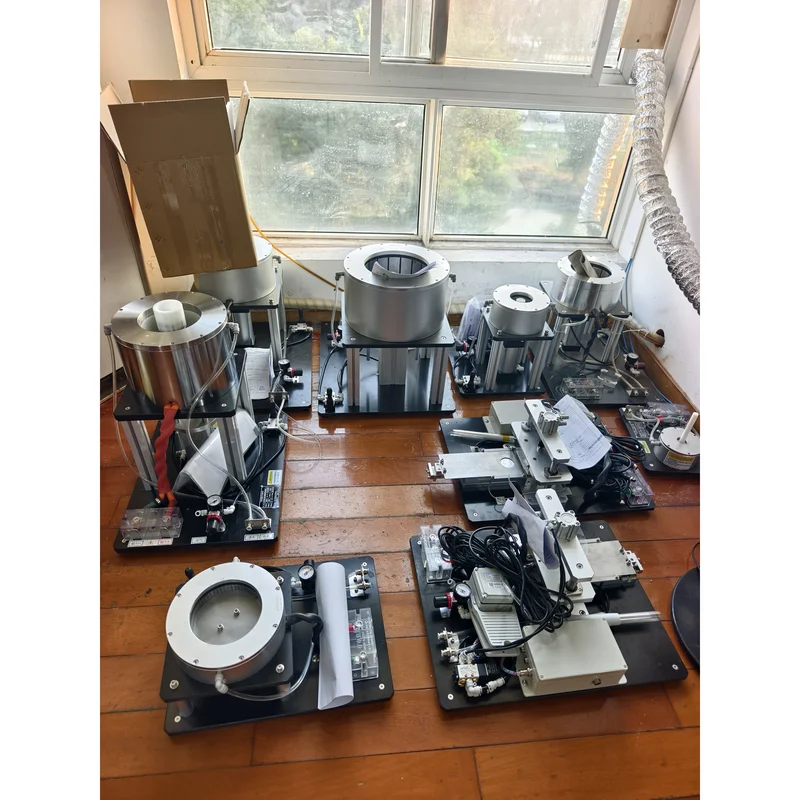
How the part is presented. Whether the part arrives on a tray, in a nest, on a conveyor, or by hand determines how the fixture is loaded and whether the process can be automated.
Step Two: Fix the Magnetization Pattern
The pattern is the deliverable. Before machine selection, describe what the magnetized part must look like magnetically: a single field direction along an axis, a field across a diameter, or several poles distributed around the part. The pattern decides which magnetizing coils and fixtures are possible, and it also decides whether a multipole approach is required.
It is worth writing the pattern down as a drawing or a specification before talking to any supplier. A pattern described loosely will produce a fixture that magnetizes something, but possibly not the part in the drawing.
Step Three: Decide Where Fixture Design Sits in the Project
There are two ways to run a magnetizing project, and the difference matters commercially as well as technically.
The first is fixture-led. The fixture concept is developed around the part, and the impulse generator is then specified as the power source that the fixture needs. This suits new parts, unusual geometries, and production lines that will run several part numbers through the same cell.
The second is platform-led. An existing magnetizing platform is already installed, and the new project is fitted to it. This suits teams adding a part number to a line they already run.
In both cases the fixture and the generator have to be specified together. A fixture designed in isolation from the discharge circuit will not deliver what the part needs, and a generator selected in isolation from the fixture may simply be the wrong size.
Step Four: Match the Platform Class to the Task
JHHS MAG manufactures a range of impulse magnetizing power supplies, and the product range groups them by design class rather than by a single application. Practical selection language usually refers to these groups:
- 1200V impulse magnetizers for general-purpose magnetization where the fixture and part geometry are the dominant factors.
- 1500V, 2500V, and 3000V multipole impulse magnetizers for parts that must carry more than a single pair of poles, such as magnetic rings and rotors used in motor and sensor work.
- 3000V medium-to-high capacity impulse magnetizers where the fixture needs a larger working volume or heavier coil assemblies.
- The 3500V, 4000V, and 6000V series for demanding tasks, up to the 6000V ultra-high-energy impulse magnetizer.
The names describe the platform’s design class. Which class fits a given part depends on the material, the fixture, and the pattern, which is exactly why the workpiece analysis comes first.
Step Five: Plan for Heat and Utilities
Repeated pulsing puts energy into the coil and the switching components. If cooling is treated as an installation detail to be solved later, the result is a machine whose behavior drifts as the shift goes on. Building the thermal plan into the specification from the start — a dedicated industrial water chiller for the magnetizing system, routed and sized as part of the installation — keeps the process consistent.
Other utility questions belong in the same conversation: how the machine is fed, where the fixture sits on the bench or in the cell, how the operator interacts with it, and what floor space the complete system occupies.
Step Six: Decide How the Result Will Be Verified
Magnetization without verification is an unmeasured process. There are two common approaches.
Sampling with a bench instrument. A fluxmeter such as the JH-T500 digital fluxmeter is used to check parts at a defined frequency. Its six ranges, from 0.2 mWb to 8 mWb, cover a working spread of measurements, and readings are taken by placing the magnet in the coil, pressing ADJUST to zero, withdrawing the magnet, and reading the flux. Upper and lower limit settings with indicator output make pass and fail decisions visible at the bench, and after any range change the zero and drift must be re-adjusted.
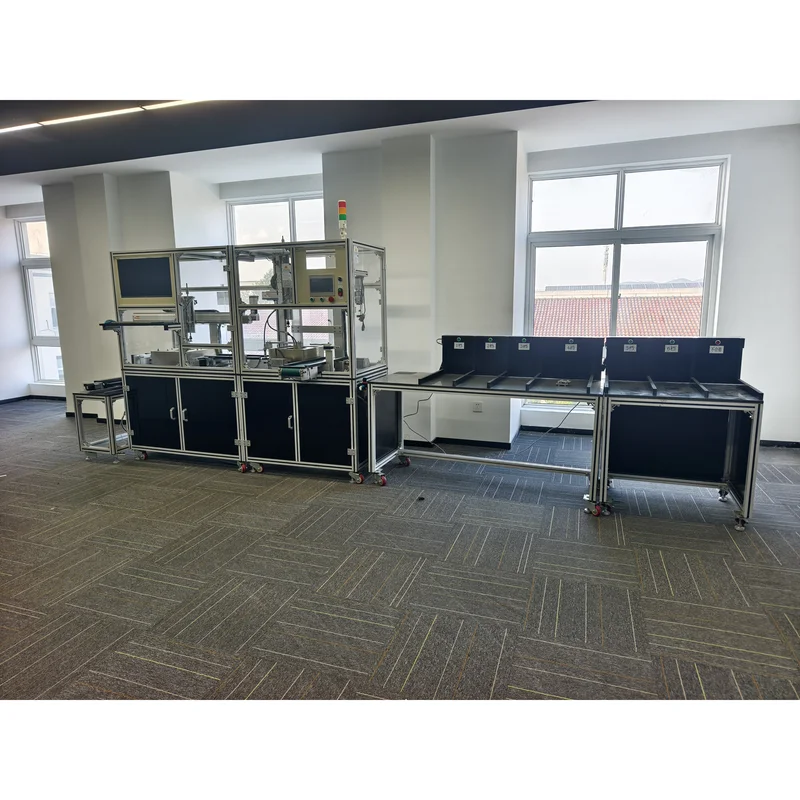
In-line verification. Where every part must be checked, an automated magnetizing and magnetic testing system integrates magnetization with measurement and part handling, so that the result is judged inside the cell rather than at a bench.
The verification choice drives several machine decisions, including whether the system needs data output and how parts are presented to the coil.
Step Seven: Set the Automation Level
The same magnetizing capability can be delivered as a manually loaded bench machine or as a station inside an automated line. Three questions usually settle the automation level:
- How many parts must pass through the station, and how is the line paced?
- Is the part loaded by an operator, a robot, or an indexing mechanism?
- Does the process need part-present detection, interlocks, or data logging?
JHHS MAG integrates expertise in electromagnetic engineering, pulse discharge technology, and industrial automation, which is what allows a manual station to grow into an automated one without changing the underlying magnetizing principle.
A Practical Selection Checklist
Before approaching a supplier, collect the following:
- A drawing or sample of the part, with material specified.
- The magnetization pattern and the direction of the field, expressed as a specification.
- The region of the part that must be magnetized, and any region that must not be.
- Whether the process is manual or automated, and how parts are presented.
- How the result will be verified, at what frequency, and what the limit values are.
- The utility situation at the installation point, including cooling and power availability.
- Any future part numbers that the same system should be able to handle.
A project that arrives with these answers can be specified directly. A project that arrives without them will spend its early weeks answering them anyway.
Common Selection Mistakes
Mistakes in this area tend to repeat. Selecting a machine before defining the pattern forces the fixture to solve a problem that was never specified. Treating the fixture as an accessory rather than the working tool leads to fixtures that magnetize inconsistently. Ignoring cooling leads to drift during long production runs. Leaving verification out of the project scope leads to parts that cannot be judged. And specifying only for today’s part number leads to a cell that cannot accept tomorrow’s variant.
FAQ
Should I choose the machine or the fixture first?
Specify them together. The fixture determines what the part sees, and the generator determines what the fixture is given. A decision made on one side alone will usually be revised.
Can a single magnetizing system run more than one part number?
Yes. Multiple fixtures can be qualified for one platform, which is often the reason manufacturers dedicate a magnetizing cell to several related parts instead of installing separate machines.
Is a higher-voltage platform always the better choice?
No. The design class has to match the part and the fixture. Overspecifying the platform does not compensate for a fixture that does not deliver the field where the part needs it.
How does multipole magnetization change machine selection?
Multipole work means several poles must be produced in a defined arrangement, which places different demands on the fixture than single-direction magnetization. The multipole impulse magnetizers in the range are designed around that class of work, and the fixture concept follows from the pole arrangement.
What documentation should accompany the finished system?
At minimum, the specification should record the magnetization pattern, the fixture held for that pattern, the verification method with its limits, and the operating procedure, so that the process can be repeated after a line change.
Next Steps
Choosing a magnetizing machine becomes straightforward once the workpiece, pattern, fixture, utilities, and verification method are defined. If your project is at that stage — or if you need help reaching it — JHHS MAG works with OEMs and industrial manufacturers from technical consultation through manufacturing and commissioning. Reach the team through the customization process. Other guides in this series are collected on our magnetizing resources page.
Website: https://jhhsmag.com/
Email: sales001@jhhsmag.com
WhatsApp: +86 18868929496
Location: Ningbo, Zhejiang, China