Industrial magnetizing machines play an important role in the production of permanent magnet motors, magnetic rings, sensors, automotive components, and other products that require a controlled magnetic field.
For OEM manufacturers, magnetization is more than a final production step. The magnetizing process must match the magnetic material, component geometry, required pole configuration, and production requirements.
Choosing suitable magnetizing equipment can help manufacturers establish a repeatable magnetization process, improve production consistency, and integrate magnetic testing into quality control.
In this guide, JHHS MAG explains how industrial magnetizing machines work, the main types of magnetizing systems, their common applications, and the factors engineers should consider when selecting equipment.
1. What Is an Industrial Magnetizing Machine?
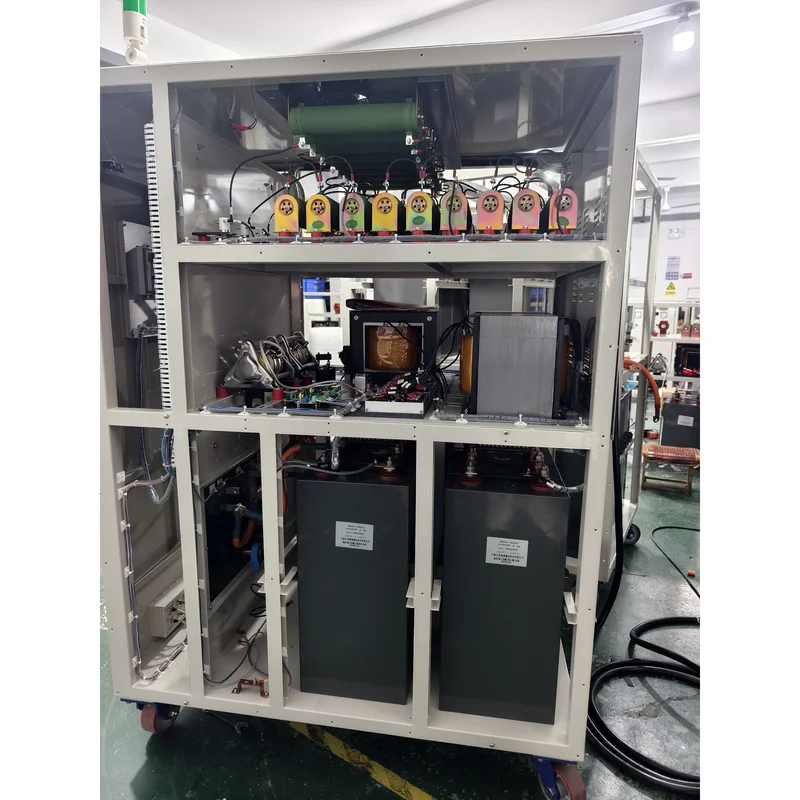
An industrial magnetizing machine is equipment designed to apply a strong magnetic field to a magnetic component, establishing the required magnetization direction or magnetic pole pattern.
Depending on the application, a component may require axial magnetization, radial magnetization, multipole magnetization, or a specially designed magnetic field distribution.
An industrial magnetizing system commonly includes:
- A magnetizing power supply
- A magnetizing coil or specially designed fixture
- A control and discharge system
- Electrical protection and safety components
- Optional cooling, automation, and magnetic testing equipment
The power supply and magnetizing fixture work together to generate the magnetic field required by the application.
For industrial manufacturers, the goal is not simply to generate a strong magnetic pulse. It is to produce the required magnetic result consistently and safely under practical production conditions.
2. How Does an Impulse Magnetizing Machine Work?
Many industrial magnetizing applications use capacitor-discharge impulse magnetizers.
These systems store electrical energy in a capacitor bank and release it rapidly through a magnetizing coil or fixture.
The basic process involves four stages.
Step 1: Electrical Energy Storage
The magnetizing power supply charges its capacitor bank to a specified voltage.
The stored energy depends on the capacitance and charging voltage:
E = ½CV²
Where:
- E = stored electrical energy, in joules
- C = capacitance, in farads
- V = charging voltage, in volts
This relationship shows that increasing the charging voltage increases the stored energy quadratically when capacitance remains constant.
However, stored electrical energy alone does not determine the magnetic field achieved at the workpiece.
Step 2: Component Positioning
The magnetic component is positioned inside or near a magnetizing coil or custom fixture.
Accurate positioning is especially important for applications involving multiple magnetic poles or tight dimensional requirements.
Step 3: Pulse Discharge
The system releases stored energy through the magnetizing fixture, generating a short-duration, high-intensity magnetic field.
The resulting current waveform and magnetic field depend on the electrical circuit, fixture design, and workpiece characteristics.
Step 4: Magnetic Verification
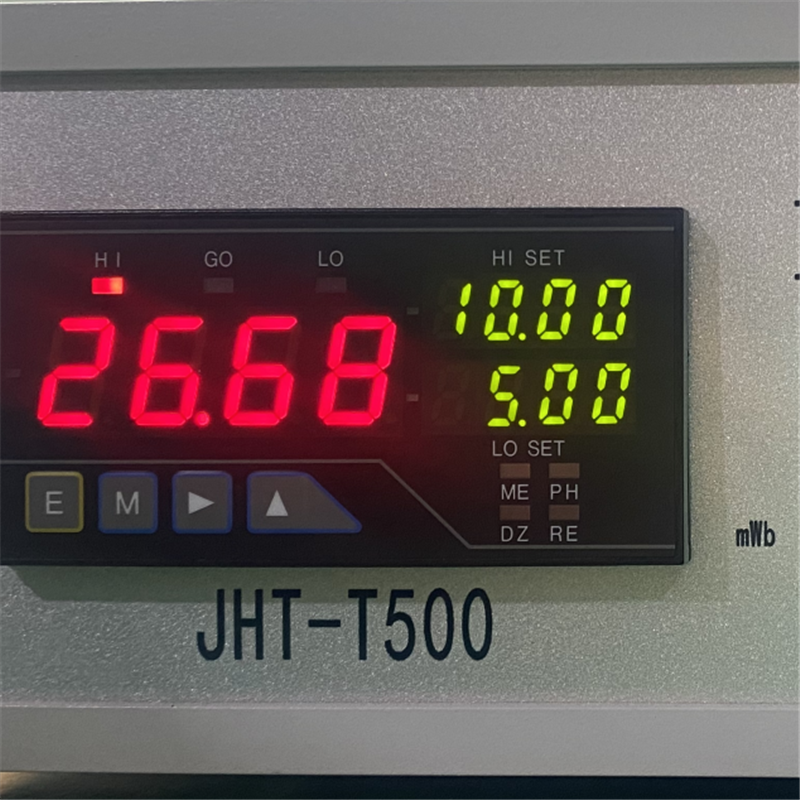
After magnetization, the component can be checked using appropriate magnetic measurement equipment.
Depending on the product, quality control may involve magnetic flux measurement, surface field measurement, pole identification, or magnetic field distribution testing.
For production applications, the magnetizing process and inspection method should be developed together.
3. Main Types of Industrial Magnetization
Different products require different magnetic pole configurations.
Axial Magnetization
In axial magnetization, the principal magnetization direction follows the axis of the component.
This method is commonly considered for certain disc-shaped, cylindrical, and ring-shaped magnetic components.
The appropriate fixture depends on the component geometry and magnetic material.
Radial Magnetization
Radial magnetization establishes a magnetic field pattern directed generally toward or away from the radial direction of a component.
It is relevant to certain cylindrical and ring-shaped applications, although the exact magnetic pattern and manufacturing method depend on the component design.
Multipole Magnetization
Multipole magnetization creates alternating magnetic poles around or along a magnetic component.
It is particularly relevant to applications such as:
- Magnetic rings
- Motor rotor components
- Position sensing components
- Speed sensing components
- Other products requiring defined pole patterns
Multipole magnetization often requires a purpose-designed fixture to achieve the specified number of poles and magnetic field distribution.
Important: The magnetizing machine, magnetic material, component dimensions, and fixture must be evaluated as a complete system. A suitable power supply does not automatically guarantee the required pole pattern.
4. Where Are Industrial Magnetizing Machines Used?
Industrial magnetizing equipment supports a wide range of manufacturing applications.
Electric Motor Manufacturing
Permanent magnet motors require magnetic components with suitable magnetization direction and magnetic characteristics.
Depending on the motor design, magnetization may take place before or after magnets are assembled into a rotor.
Applications can include BLDC motors, permanent magnet synchronous motors, and other industrial motor systems.
The required magnetizing process depends on rotor construction, magnetic material, pole configuration, and assembly constraints.
Magnetic Ring Production
Magnetic rings are used in various motor, sensing, and industrial applications.
A magnetic ring may require axial, radial, or multipole magnetization depending on its intended function.
For multipole magnetic rings, fixture design and component positioning are particularly important.
Automotive Components
Automotive manufacturing uses magnetic components in various motor and sensing applications.
These components may require controlled magnetization and subsequent inspection to meet the manufacturer’s production specifications.
Equipment selection should account for the actual component design and production environment rather than relying on voltage ratings alone.
Industrial Automation
Manufacturers may integrate magnetizing equipment into automated production lines to coordinate:
- Component loading and positioning
- Magnetizing operations
- Magnetic inspection
- Pass/fail decisions
- Component unloading and handling
The required level of automation depends on production volume, cycle time, component variation, and inspection requirements.
5. How to Choose the Right Industrial Magnetizing Machine
Selecting magnetizing equipment requires more than comparing machine prices or charging voltages.
OEM engineers should evaluate the following factors.
Magnetic Material
The magnetic material strongly influences magnetization requirements.
For example, NdFeB and ferrite materials can have different magnetic characteristics and magnetization requirements.
The actual grade, geometry, magnetization state, and relevant material data should be provided to the equipment manufacturer.
Component Dimensions and Geometry
The diameter, thickness, length, and shape of a magnetic component affect the magnetizing fixture design.
For assembled components, surrounding metallic parts, available space, and positioning constraints may also matter.
Required Magnetization Pattern
Before selecting equipment, determine whether the product requires:
- Axial magnetization
- Radial magnetization
- Diametrical magnetization
- Multipole magnetization
- A custom pole arrangement
For multipole applications, the number of poles and the required magnetic field distribution should be clearly defined.
Magnetizing Power Supply
Industrial magnetizers are available with different charging voltages, energy capacities, and electrical configurations.
The required equipment must be selected based on the complete application, including the fixture and workpiece.
Charging voltage alone is not a reliable measure of magnetizing capability.
Two systems with the same voltage rating can perform differently because of differences in capacitance, circuit design, coil impedance, and fixture geometry.
Magnetizing Coil and Fixture
The magnetizing fixture is a critical part of the system.
Its design affects how the magnetic field is applied to the component and whether the required magnetic pattern can be achieved.
For custom applications, engineers may need to evaluate fixture geometry, insulation, mechanical positioning, heating, and production durability.
Production Capacity and Cooling
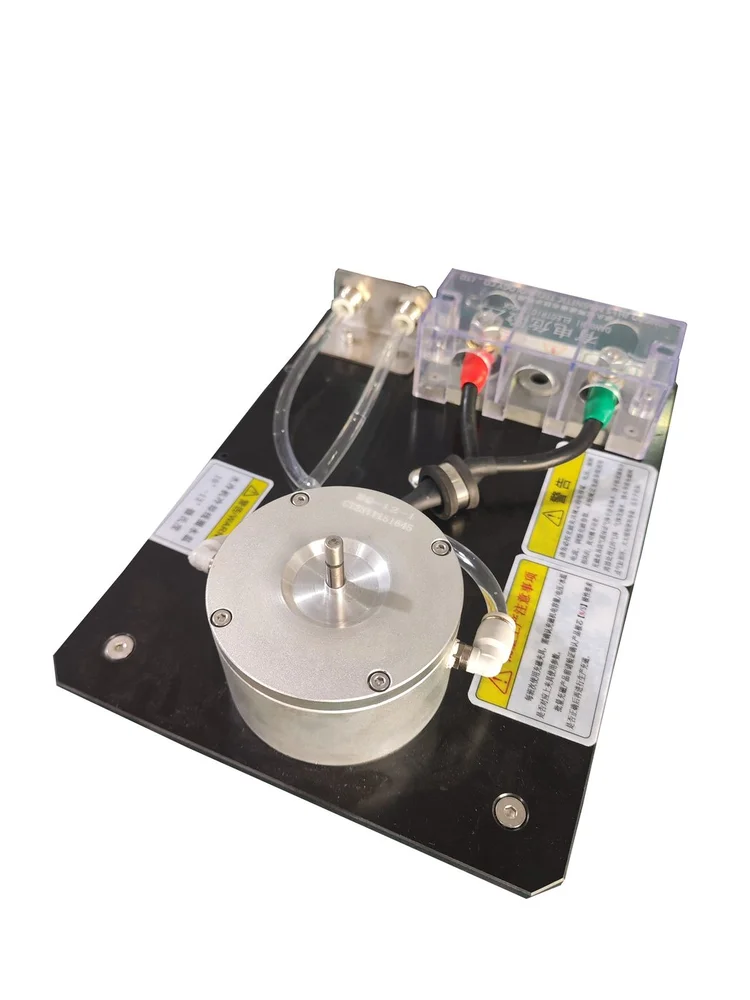
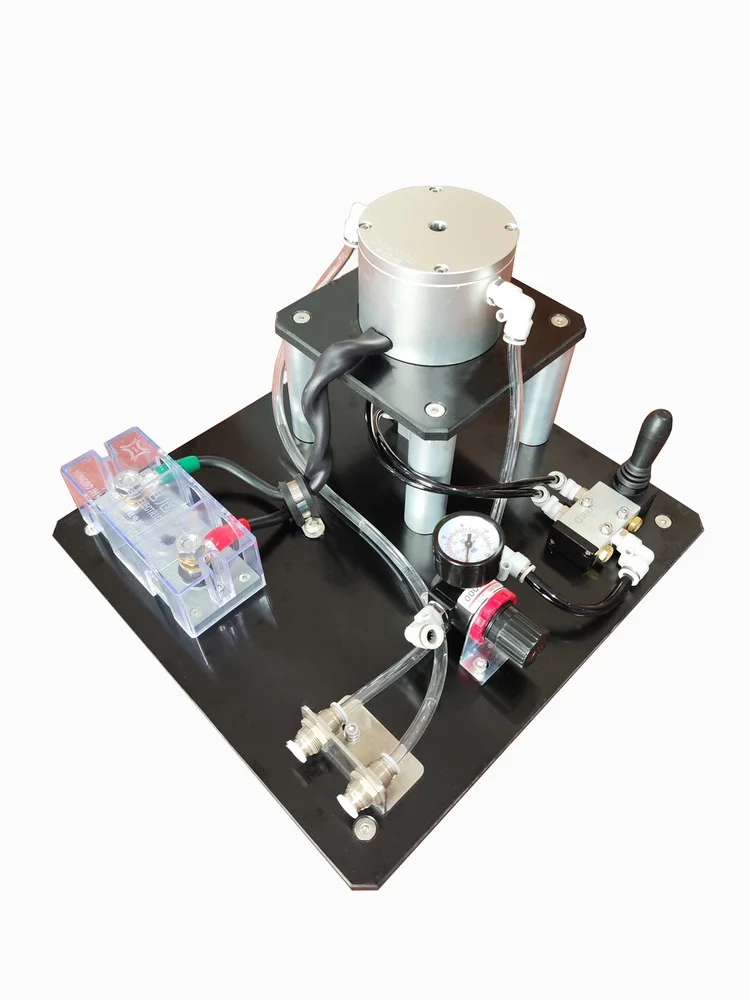
Repeated magnetizing operations can generate heat in the coil and electrical system.
For applications with demanding production cycles, suitable cooling and thermal management may be necessary.
Production requirements should therefore include the expected cycle time, operating frequency, and working conditions.
Magnetic Testing Requirements
A production-ready magnetizing solution should also consider how the finished component will be inspected.
The correct inspection method depends on the product specification.
For some applications, measuring total magnetic flux may be useful. Other products require additional checks of magnetic field strength, pole arrangement, or field distribution.
6. Standard Magnetizing Machines vs. Custom Magnetizing Systems
Standard magnetizing machines can be suitable when the application matches an established equipment configuration.
However, many OEM projects require customization because of:
- Unusual component geometry
- Special pole arrangements
- Limited fixture space
- Automated production requirements
- Specific inspection requirements
- High-duty-cycle operation
- Integration with existing production equipment
A custom magnetizing solution may combine a suitable magnetizing power supply, application-specific fixtures, cooling equipment, magnetic testing instruments, and automation. See Custom Magnetizing Solutions.
The system should be developed around the workpiece and the required production process.
7. JHHS MAG Industrial Magnetizing Equipment
JHHS MAG, operated by Ningbo Jiuheng Huisheng Technology Co., Ltd., is a manufacturer of industrial magnetizing equipment based in Ningbo, China.
Our product range includes:
- 1200V magnetizing equipment
- 1500V and 2500V multipole impulse magnetizers
- 3000V magnetizing equipment
- 3500V, 4000V, and 6000V high-energy magnetizing equipment
- Custom magnetizing coils and fixtures
- Industrial water chillers for magnetizing systems
- Magnetic flux testing instruments
- Automated magnetizing and magnetic testing systems
These equipment categories support different magnetizing and production requirements.
The appropriate configuration must be selected according to the customer’s magnetic material, component design, pole pattern, and manufacturing conditions.
JHHS MAG focuses on magnetizing equipment and related production solutions. We do not position ourselves as a supplier of permanent magnets.
See the full equipment range on the Products page.
8. Information to Prepare Before Requesting a Magnetizing Solution
To help an equipment manufacturer evaluate your application, prepare the following information:
| Item | What to state | Why it changes the quote |
|---|---|---|
| Material and grade | NdFeB N42SH, SmCo 2:17, ferrite Y30, AlNiCo 5 | Sets the magnetizing field and the Hcj margin you need |
| Geometry | Dimensions, wall thickness, pole count | Decides fixture type and the field uniformity requirement |
| Orientation | Single direction, multipole, multipole count | Decides fixture architecture, not machine size |
| Target flux | mWb or Vs per turn, with the measurement method | Defines the acceptance gate and the instrument |
| Cycle time | Parts per hour, manual or automated load | Drives automation scope and cooling design |
| Assembly state | Magnetize before or after assembly | Post-assembly magnetization usually needs a custom fixture |
| Environment | Ambient temperature range, line voltage | Affects capacitor bank selection and derating |
Providing drawings and technical requirements at the beginning of a project can make the selection and design process more efficient.
What goes wrong, and what it costs
Most magnetizing problems fall into five patterns. Each one has a signature symptom that shows up downstream, not at the machine.
| Failure mode | Root cause | Production symptom | Cost |
|---|---|---|---|
| Low flux after magnetizing | Machine sized to the knee, fixture impedance mismatch | Parts pass warm, fail cold | Rework, warranty returns |
| Cracked magnets | Excessive peak current, poor fixture support | Cracks appear after plating or assembly | Scrap plus line stoppage |
| Inconsistent multipole pattern | Asymmetric fixture, saturating pole piece | Cogging torque variation, back-EMF imbalance | Motor rejects at end of line |
| Fixture overheating | Long pulse width, undersized busbar | Cycle time stretched, field drifts | Throughput loss, premature fixture failure |
| Field drift over a shift | Capacitor bank aging, thermal expansion in fixture | Slow yield decline nobody attributes to the machine | Silent scrap |
The last row is the expensive one. A magnetizing machine that drifts by 5% over a shift will not trigger any alarm, and the yield loss shows up as a cost line two months later. Log flux readings against time and part count, and you will see the drift before the customer does.
9. Frequently Asked Questions
What is the difference between a magnetizing machine and a permanent magnet?
A permanent magnet is a magnetic material or component that retains magnetization. A magnetizing machine is equipment used to establish the required magnetization in a suitable magnetic material or component.
Can one magnetizing machine handle different magnetic components?
In some cases, one magnetizing power supply can be used with different fixtures. However, compatibility depends on the electrical requirements, fixture design, component geometry, and required magnetic results.
Is a higher magnetizing voltage always better?
No. Voltage is one parameter in a chain. Stored energy scales as ½CV², but the field your part actually sees depends on fixture impedance, peak current and pulse width. A higher-voltage machine driving a poorly matched fixture can produce a weaker field than a lower-voltage unit driving a matched one.
What is a multipole magnetizing fixture?
A fixture that writes a defined sequence of alternating poles in one discharge, using segmented pole pieces and routed conductors rather than a simple coil. Pole count, pole spacing and field uniformity across the part are set by the fixture geometry, which is why the fixture — not the power supply — decides whether a rotor meets its cogging torque target.
Does magnetization need to be tested after the process?
For industrial quality control, appropriate magnetic verification is often important. The specific test method should be selected according to the product’s acceptance criteria.
10. Conclusion
An industrial magnetizing machine is an essential part of many magnetic component manufacturing processes.
For OEM manufacturers, successful magnetization depends on selecting the right combination of power supply, magnetizing fixture, process parameters, and inspection method.
Rather than choosing equipment based only on voltage or price, engineers should evaluate the magnetic material, component geometry, pole configuration, production requirements, and quality control needs. All guides in this series are indexed on our magnetizing guides index.
Related reading
- Global magnetizing machine market outlook 2026–2035
- How to choose the right magnetizing machine
- How to specify a magnetizing machine
- Industrial magnetizers — the machine range this guide is written around
- magnetizers and demagnetizers explained
Looking for an industrial magnetizing solution for your production line?
JHHS MAG provides industrial magnetizing equipment, custom magnetizing coils and fixtures, and automated magnetizing and testing solutions.
Contact Our Engineering Team with your component drawings and technical requirements to discuss a suitable equipment configuration.
JHHS MAG — Industrial Magnetizing Equipment Manufacturer
Website: https://jhhsmag.com/
Email: sales001@jhhsmag.com
WhatsApp: +86 18868929496
Location: Ningbo, Zhejiang, China
Pingback: How Does a Capacitor-Discharge Magnetizer Work?
Pingback: Custom Magnetizing Coils and Fixtures: Design Guide
Pingback: Magnetizing NdFeB and Ferrite Magnets: Considerations
Pingback: Charging Voltage, Stored Energy & Discharge Current
Pingback: Magnetization for Permanent Magnet Motor Manufacturing