Magnetizing Equipment for BLDC and PMSM Motor Production
BLDC and PMSM motors rely on rotor magnets that are magnetized after assembly, pole by pole, so the field stays even and the motor runs smoothly. JHHS MAG builds the rotor fixtures, power supplies and checks that hold that result in production.
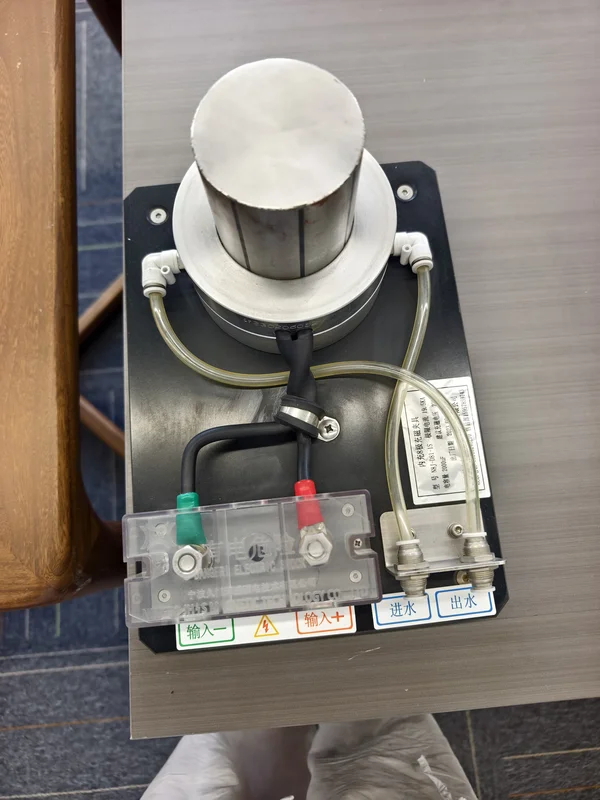
Where Magnetizing Fits in Motor Rotor Production
A BLDC or PMSM motor turns because the rotor carries permanent magnets whose field interacts with the stator windings. Whether the magnets are surface mounted on the rotor or buried inside a lamination stack, they are usually fitted in an unmagnetized state, because unmagnetized parts do not attract one another, do not pull in loose steel and are far easier to press, glue and balance. EV motor rotor magnetizing is the dominant use of this configuration, which is why the same hardware is usually bought as motor magnetizing equipment rather than as a single standalone magnetizer.
Magnetizing therefore comes late in rotor assembly, after the magnets are fixed and the rotor is balanced, and just before the finished rotor is tested. At that point the magnets cannot be reached individually, so the applied field has to pass through the surrounding steel and reach every pole at once.
Magnet and stack preparation
Magnets are inserted or bonded into the rotor body while they are still unmagnetized.
Rotor assembly and balancing
The rotor is stacked, fixed and balanced before any magnetic force is present.
Rotor magnetizing
All poles are magnetized in one discharge through the surrounding steel.
Back EMF and flux check
The magnetized rotor is compared against a reference before stator assembly.
Rotor Types and Magnet Arrangements
The way the magnets sit in the rotor decides how the field has to be applied and how much of it the tooling has to deliver.
Surface mounted rotor
Magnets fixed to the outside of the rotor body and magnetized with a radial pattern around the circumference.
Interior permanent magnet rotor
Magnets buried in the lamination stack and magnetized after assembly through the surrounding steel.
Multipole rotor segments
Rotors with several pole pairs that must be magnetized with the correct pole count and spacing.
Rotor assemblies with a shaft
Parts where the shaft and bearings are already fitted and the field has to work around them.
Magnetization Requirements for Motor Rotors
The field applied to a rotor has to do two things at once: saturate every magnet in the assembly and leave the poles evenly distributed around the circumference. Saturation depends on the grade of the magnets and on how much steel sits between the tooling and the magnet, so an interior rotor needs more applied field than a surface mounted rotor of the same size.
Even distribution is what the motor feels. If one pole is stronger than its neighbour the rotor experiences an uneven pull as it turns, which shows up as torque ripple and, in a sensorless motor, as a less clean position signal. The fixture is therefore designed around the pole count and the pole spacing of the rotor, and the result is checked pole by pole rather than as a single number.
The magnetizing step is also a mechanical and thermal event. The discharge produces a force on the rotor and its tooling, and the coil warms with every shot, so the rotor is held firmly in a defined position and the station is cooled so that the first part and the hundredth part read the same.
- v — e
- o — l
- v — e
- o — t
Equipment for BLDC and PMSM Rotor Lines
Rotor size, pole count and the presence of a shaft decide which power supply and fixture combination a line needs.
- Multipole impulse magnetizers — for rotors that need several evenly spaced poles
- Ultra high energy impulse magnetizers — larger rotors and magnets buried deep in a lamination stack
- 3000V medium to high capacity impulse magnetizers — mid size rotors in continuous production
- Automated magnetizing and testing systems — where magnetizing and rotor testing run as one station
- Products overview — the full magnetizing and testing range
Rotor Fixtures and Coils
A rotor fixture is built around the outside of the rotor. It carries the pole pieces that shape the field into the pattern the motor needs, it locates the rotor so that the poles land in the right angular position, and it holds the part against the force of the discharge. Because the rotor is magnetized after assembly, the fixture also has to work around shafts, end caps and balancing features.
Where the rotor runs hot in production, the fixture is water cooled so that its geometry and its resistance stay stable. The pole pieces, the coil and the cooling are designed together with the rotor drawing, and the same fixture is used part after part so that every rotor on the line is magnetized in the same way.
Rotor Testing and Automation Options
A magnetized rotor is checked for the flux it carries and, where the design requires it, for the evenness of its poles. On a production line this check is most useful when it happens in the same place as the magnetizing, so the rotor is magnetized, measured and either passed or held back before it leaves the station.
For lines that run at a fixed rate the magnetizing station is integrated with the handling around it: the rotor is loaded and located automatically, the discharge is triggered by the line, and the result is recorded against the part. Where a whole line is being planned, the magnetizing step is specified together with the stations before and after it so that the cycle time fits.
Frequently Asked Questions
Questions from motor manufacturers about rotor magnetizing after assembly, pole evenness and fixture choice.
Are motor rotor magnets magnetized before or after assembly?
For most BLDC and PMSM rotors the magnets are magnetized after they have been fitted to the rotor, so that assembly, gluing and balancing take place without magnetic forces pulling parts together or attracting loose steel.
Why does pole evenness matter on a motor rotor?
If one pole is stronger than its neighbour the rotor feels an uneven pull as it turns, which appears as torque ripple and can disturb the position signal of a sensorless motor, so the poles are checked individually rather than as a single total.
Can an interior permanent magnet rotor be magnetized after assembly?
Yes. The applied field is strong enough to pass through the surrounding lamination steel and reach the buried magnets, which is why an interior rotor usually needs more energy than a surface mounted rotor of the same size.
Does a rotor need its own fixture for each motor type?
The power supply can serve several products, but the pole count and pole spacing are set by the fixture, so a rotor with a different pole layout is normally produced with a fixture designed for that rotor.
Is rotor magnetizing tested on the line?
Where the volume justifies it the rotor is magnetized and measured at the same station, so the flux reading stays tied to the part and a rotor outside the accepted range never moves on to assembly.
Related reading
Discuss Your Rotor Magnetizing Project with Our Engineers
Send us the rotor drawing, the magnet grade and the pole layout. Our engineering team will reply with a fixture and power supply proposal.
Ready to magnetize your motor rotors?
Tell us the rotor type, the pole count and the rate you need. We will suggest the station and the fixture that fit your line.
REQUEST A QUOTE
Get a quotation for Magnetizing Equipment for BLDC and PMSM Motor Production
Tell us about your component, magnet material and production target. Our engineers review the requirement and reply with technical feasibility and a quotation.
- Reviewed by our own engineers, not a sales desk
- Send drawings, samples or a reference part
- No obligation — we quote only what fits your process
Prefer to talk it through? WhatsApp +86 188 6892 9496