A magnetic ring is an efficient shape for a magnetic function: it places magnetic material exactly where a rotating or radial interaction is needed and leaves the center free. The cost of that efficiency is a magnetization task that is considerably more demanding than a single-direction pattern. Multipole magnetization of magnetic rings requires a fixture that creates several distinct field regions around the same part, and it rewards teams who treat the fixture as the central engineering problem rather than an accessory. This article sets out the common methods, the recurring challenges, and the practical route to a repeatable process. JHHS MAG supplies the multipole impulse magnetizers that power this class of work.
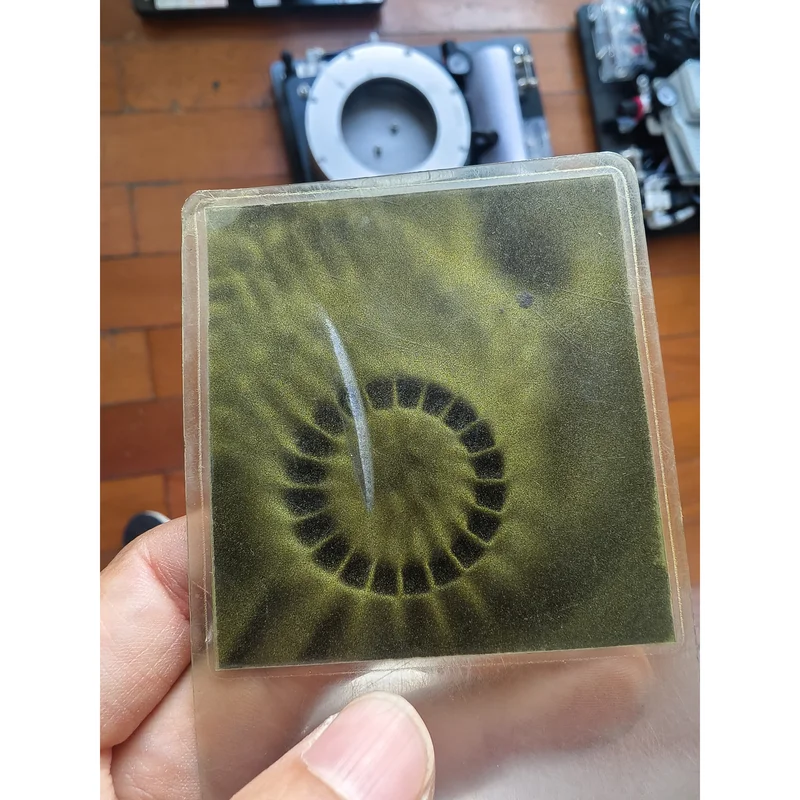
Why Rings Are Magnetized with Multiple Poles
A ring carrying a single pair of poles behaves like a simple axial or radial magnet: useful, but limited to one field direction. Many applications need more than that. Where a ring must interact with several sensing elements distributed around it, or with a rotating element that expects an alternating pattern, a single pair of poles cannot produce the required behavior. The part must present a sequence of poles around its circumference instead.
That requirement is what defines multipole magnetization. The ring is magnetized so that its circumference carries an alternating arrangement of poles rather than a single transition from one pole to the other. The pattern, not the material, is the difficult part of the specification.
Method One: Single-Pulse Multipole Fixtures
The most direct approach is to build the entire pole arrangement into the fixture and magnetize the ring in one pulse. The fixture holds windings and pole structures positioned around the ring, and a single discharge drives current through the arrangement so that every pole is created at the same time.
The attraction of this method is process simplicity: one load, one pulse, one unload. Because the whole pattern is created simultaneously, adjacent poles cannot drift apart between operations, and the ring is finished in a single handling step — which matters in high-volume production, including motor manufacturing and automotive component work.
The difficulty is concentrated in the fixture. It must create several field regions that are distinct from one another, keep them in the correct positions, and stay mechanically stable through thousands of pulses. This is the approach that benefits most from purpose-built coils and fixtures.
Method Two: Indexed or Sequential Magnetization
A second family of approaches creates the pattern in stages rather than all at once. The ring, or the fixture around it, is indexed between operations so that the poles are produced in sequence.
Sequential magnetization places a different demand on the system: the indexing itself must be accurate, because pole placement depends on the ring returning to the correct angular position at each step. It can suit cases where the pole arrangement is difficult to produce in a single fixture, or where an existing machine is being adapted. In exchange, it introduces more process steps and more opportunities for variation between the first and last poles produced.
Single-pulse and indexed approaches are not in competition so much as suited to different circumstances: one prioritizes throughput and pattern integrity, the other prioritizes fixture simplicity in specific geometries.
Fixture Architecture for Ring Multipole Work
Regardless of the method, a ring magnetizing fixture is built from the same functional elements:
Windings. Current-carrying conductors that generate the field. Their arrangement determines whether the poles are produced in one discharge or in groups.
Pole pieces. Structures that collect the field and deliver it to a defined region of the ring rather than spreading it around the circumference.
Return paths. Magnetic structures that complete the field circuit outside the workpiece so that the field is directed through the material where it is wanted.
Location features. Nests, stops, or clamps that place the ring in the same position, to the same angle, every time.
Insulation and mechanical support. Materials that hold the assembly together and isolate the windings from the pulse and from the workpiece.
The interaction between these elements is what determines whether the pattern comes out as designed. Increasing the pole definition without improving the mechanical location, for example, typically produces a sharper pattern on average but a less consistent one part to part.
Challenge One: Pole Definition
The transition between adjacent poles should be as defined as the application requires. If the fixture spreads the field too broadly, the boundary between poles becomes soft and the ring behaves as though it carried fewer, weaker poles. Producing a well-defined boundary means concentrating the field in the pole region and keeping the return path away from the transition zone.
Pole definition also interacts with the ring itself. The geometry of the ring — its wall, its diameter, whether it is a solid body or a bonded assembly — influences how the field distributes inside the material.
Challenge Two: Consistency Between Poles
A multipole ring is judged by all its poles, not by the strongest one. If one pole is stronger than its neighbours, the application sees an uneven pattern even though the total flux looks acceptable, and total-flux measurement alone will not reveal it.
Consistency demands mechanical accuracy. The fixture must place every pole structure in the correct position, and the ring must locate in the same relationship to them on every cycle. Machining tolerance, seating of the ring in the nest, and stability of the fixture over time are all part of the answer.
Challenge Three: Penetrating the Ring Wall
Multipole magnetization requires the field to reach the material that must be magnetized and not simply to pass around it. In a ring, part of the field path runs through the wall of the part, so the fixture must be designed around the geometry of that wall. Thin-walled rings present a particular difficulty because there is less material for the field to act on, and the fixture must work with the wall rather than around it.
Challenge Four: Fixture Durability and Heat
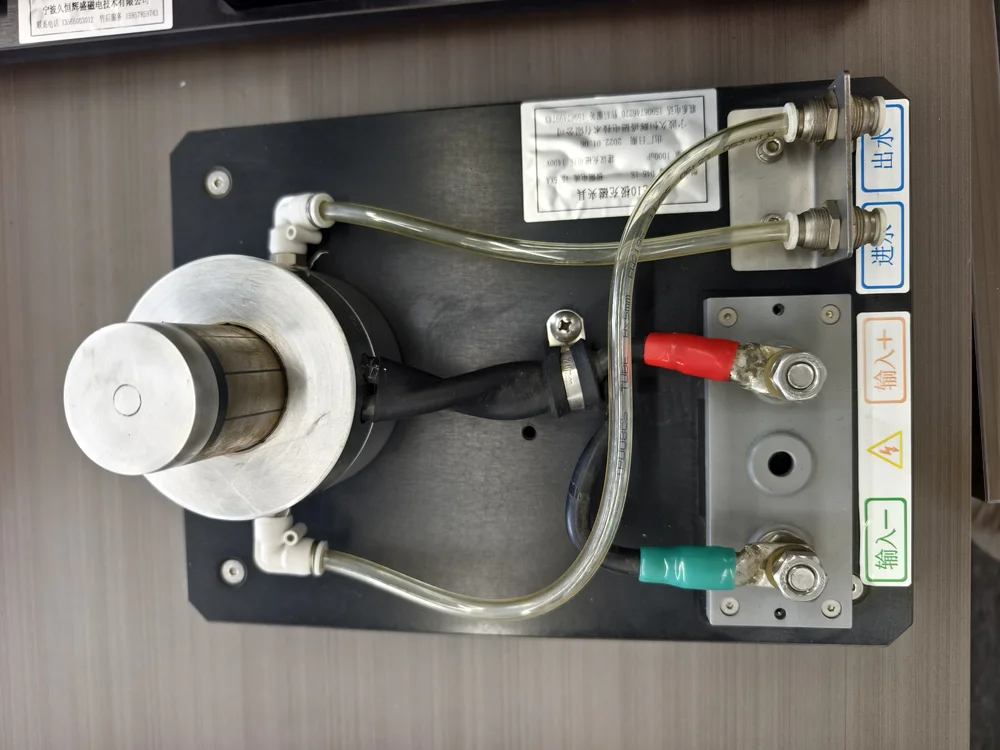
A multipole fixture carries current through several windings and concentrates the field through pole structures, so it accumulates heat and experiences mechanical and electrical stress over a production run. Repeated pulsing is what makes an untested fixture design visible: a fixture that behaves during setup may drift once it is hot. Cooling belongs in the fixture design, not only in the machine installation, and the JHHS MAG platform family includes industrial water chillers for magnetizing systems to keep thermal conditions stable across a shift.
Durability also covers the mechanical side. Pole pieces, clamps, and locating features must hold their position over time, because a fixture that shifts after a prolonged run produces a pattern that shifts with it.
Challenge Five: Verification of a Multipole Pattern
Verification closes the loop, and for multipole rings it deserves particular attention. The JH-T500 digital fluxmeter measures flux across six ranges from 0.2 to 8 mWb, with the established procedure of placing the magnet in the coil, pressing ADJUST to zero, and reading the flux once the magnet is withdrawn. Upper and lower limit settings with indicator output allow pass and fail to be judged directly at the bench, and a reading should not exceed 40.00 mWb.
For multipole work, total flux is a starting point rather than the whole picture. Because it cannot show whether individual poles are balanced, the process specification should define the measurement points that will be checked and the acceptable result at each. Where every ring must be judged, an automated magnetizing and magnetic testing system can integrate magnetization with measurement inside the cell.
Choosing the Power Platform
The platform supplies the pulse that the fixture converts into a pattern. JHHS MAG builds multipole impulse magnetizers at 1500V, 2500V, and 3000V, including the 3000V multipole magnetizer, and the wider range extends to the 3500V/4000V/6000V ultra-high-energy series where the task demands it. The correct choice depends on the fixture, the ring geometry, and the pattern rather than on the name of the platform alone.
Working with a Magnetizing System Supplier
Ring multipole projects move fastest when the fixture and the platform are developed together, and when the application’s acceptance criteria are stated in terms of the pattern. A useful project brief describes the ring’s drawing and material, the pole arrangement and its orientation, the region of the ring that must be magnetized, how the ring will be located during production, and how the pattern will be verified. JHHS MAG provides technical consultation, system design, manufacturing, and commissioning for this class of work.
FAQ
Can a magnetic ring be magnetized in a single pulse?
Yes, where the fixture is built to create the complete pole arrangement in one discharge. This approach gives the most consistent pattern and the simplest production cycle, and it places the engineering effort into the fixture.
Why isn’t total flux enough to verify a multipole ring?
Total flux reflects the ring as a whole. A ring with unequal poles can produce an acceptable total while behaving unevenly in the application, so the pattern has to be examined at defined points as well.
What causes soft pole boundaries?
A fixture that spreads the field too widely and does not keep the return path clear of the transition zone between poles. Pole definition is primarily a fixture design outcome.
Does the ring material matter as much as the fixture?
Both matter. The fixture determines what field reaches the material, and the material determines how it responds and how much of the alignment remains.
Can several ring part numbers share one machine?
Yes. The power platform can serve multiple rings by changing fixtures, which is common where a production cell is dedicated to a family of related parts.
Summary
Multipole magnetization of magnetic rings is a fixture problem with a measurement obligation attached. Building the pole arrangement into the fixture for a single-pulse process, controlling pole definition and consistency through mechanical accuracy, accounting for heat and durability, and verifying the pattern point by point are the steps that turn a difficult pattern into a repeatable production process. To discuss a specific ring geometry, explore the magnetizing solutions on offer. The full set of these guides sits on our magnetizing resource library.
Website: https://jhhsmag.com/
Email: sales001@jhhsmag.com
WhatsApp: +86 18868929496
Location: Ningbo, Zhejiang, China