Magnetizing Solutions for Sensors and Magnetic Components
Sensor parts need a small, well defined amount of magnetization in a specific place rather than the strongest field obtainable. JHHS MAG builds the tooling and the settings that leave each part with exactly the field the sensing element expects.
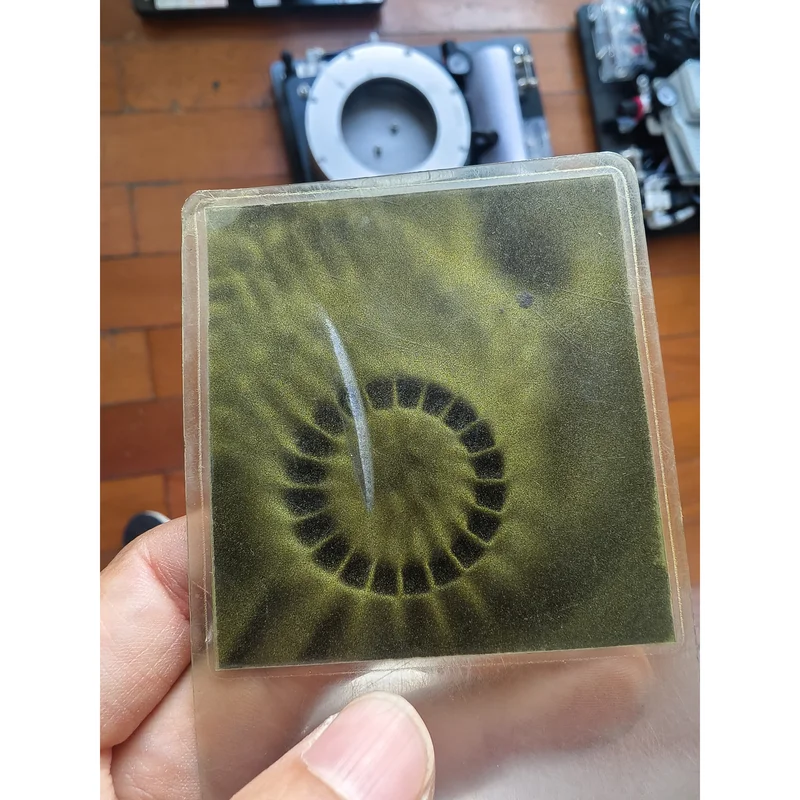
Where Magnetizing Fits in Sensor and Magnetic Component Production
Sensors and small magnetic components are a different kind of magnetizing job. Instead of driving a large magnet to full saturation, the part often has to be given a small, well defined amount of magnetization in a specific place, or a pattern of small poles that a sensing element will read a short distance away. Magnetization for sensors is a low-field operation compared with rotor work, and the main risk is over-magnetizing a part whose output is meant to stay linear.
These parts are produced on high speed lines and are small enough to be handled in trays or on tape, so magnetizing sits between the assembly of the component and its calibration or test. The step has to fit the rate of the line and has to leave the part with the field the sensor was designed around, no more and no less.
Component assembly
The magnet or magnetic element is placed in its carrier, moulding or housing.
Magnetizing
The part is given the small, defined magnetization the sensor is designed to read.
Field check
The field is measured against a reference at the distance the sensing element will see.
Calibration or packing
The accepted part moves to calibration or to packing in trays or on tape.
Sensor Magnets and Small Magnetic Components
The parts handled here are small, numerous and often already fitted into the housing they will be used in.
Sensor magnets and targets
Small magnets and targets that a Hall, magnetoresistive or reed element reads across a short air gap.
Magnetic encoder discs
Discs and small rings with a fine pole pattern used to read rotation at close range.
Magnetic switch and latch parts
Components whose magnetization has to be low enough to switch only at the intended distance.
Magnetic elements in housings
Parts where the magnet is already moulded or pressed into a non magnetic housing.
Magnetization Requirements for Sensor Components
The requirement for a sensor magnet is often the opposite of the requirement for a motor magnet. A motor magnet is driven to full saturation so that its field is as strong and as stable as possible; a sensor magnet is frequently magnetized only part of the way, or in a small localised region, because the sensing element is designed to work over a narrow band of field and at a short distance.
That makes control more important than raw energy. The applied field is set so that the part comes out inside the band the sensor expects, and the same setting is repeated for every part. Over magnetizing a sensor component is a defect just as a weak part is, because it moves the switching point or the output curve away from the value the design assumes.
Small components also make the geometry of the field matter. The pole has to land in the right place on a part only a few millimetres across, so the fixture locates the part precisely and shapes a small, well defined field rather than a large one, and the check is taken at the distance the sensing element will actually see.
- — d
- h — e
- — s
- e — r
Equipment for Sensor and Component Magnetizing
Because the parts are small and the field is often modest, the equipment is chosen for control and repetition rather than for the largest possible output.
- 1200V impulse magnetizers — low energy impulse power for small, precisely magnetized parts
- Multipole impulse magnetizers — where a small part needs more than one pole
- Bulk and pre magnetizers — magnetizing many small parts together
- Orientation power supplies — for parts magnetized while an orienting field is applied
- Products overview — the full magnetizing and testing range
Fixtures for Small Magnetic Components
Fixtures for small parts are built around two problems: putting the part in the same place every time and keeping the field small and controlled. The part is located in a nest or a pocket that sets its position and its orientation, and the coil is sized so that it delivers the intended field over the intended area and no more.
Because the parts are made in volume, the fixture is also built for speed. Where the part can be magnetized inside a tray or a strip, the tooling is matched to that carrier so that the parts do not have to be picked out first. The coil, the nest and any cooling are specified together with the component drawing.
Field Verification and Automation Options
For a sensor part the check has to match the way the part is used. A fluxmeter with a test coil gives the total flux, while a Tesla meter or a small distribution check gives the field at the point and the distance the sensing element will actually see, which is often the more useful reading for a sensor magnet.
On a high speed line the magnetizing and the check are usually brought together so that the part is magnetized, measured and sorted in one cycle. Because the parts are small and numerous, the reading is often recorded against the batch rather than the single part, so that a drift in the magnetizing setting can be seen before it reaches the customer.
Frequently Asked Questions
Questions from sensor and component makers about controlled magnetizing and checking the field at the working gap.
Why would a sensor magnet be magnetized only partly?
A sensing element is designed to work over a narrow band of field, so the part is magnetized to the level the sensor expects rather than to saturation, and over magnetizing a sensor part is treated as a defect just as a weak part is.
How is a small sensor magnet checked?
It is measured the way it will be used: the field is read at the working air gap of the sensing element, using a Tesla meter or a small distribution check, and the reading is compared against a reference.
Can small parts be magnetized while still in their carrier?
Where the part and the fixture allow it, small components can be magnetized inside a tray or a strip, which removes a handling step from a high speed line and keeps each part in a known position.
Is a strong magnetizing field always better for a sensor part?
No. For a sensor component the field has to be controlled rather than maximized, because the sensing element reads a specific range and a field that is too strong moves the switching point or the output curve away from the design value.
How is the magnetizing step kept consistent across a large batch?
The magnetizing setting is fixed once and repeated part after part, and the field of the finished parts is compared against a reference, often recorded against the batch so that any drift is seen early.
Discuss Your Sensor Magnetizing Project with Our Engineers
Send us the component drawing and the field the sensing element expects. Our engineering team will reply with a tooling and power supply proposal.
Ready to magnetize sensor components precisely?
Tell us the part and the field it has to carry. We will suggest the tooling and the settings that fit.
REQUEST A QUOTE
Get a quotation for Magnetizing Solutions for Sensors and Magnetic Components
Tell us about your component, magnet material and production target. Our engineers review the requirement and reply with technical feasibility and a quotation.
- Reviewed by our own engineers, not a sales desk
- Send drawings, samples or a reference part
- No obligation — we quote only what fits your process
Prefer to talk it through? WhatsApp +86 188 6892 9496