Multipole Magnetizing Fixtures
Multipole fixtures write a defined sequence of poles into the component in one discharge, instead of a simple two-pole arrangement.
What a Multipole Fixture Is
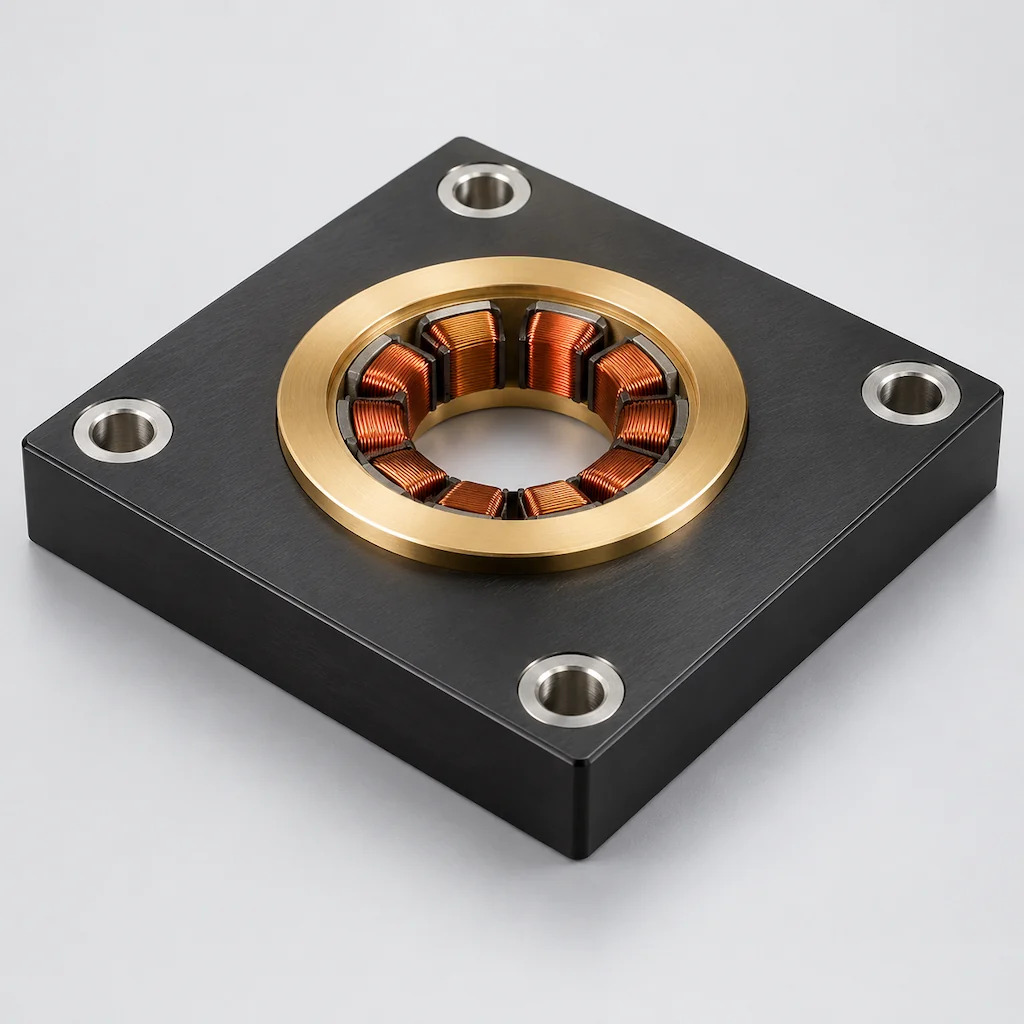
A multipole magnetizing fixture writes a defined sequence of poles into a component in a single discharge, so that north and south regions alternate around a ring or across a face. Instead of a simple two-pole arrangement, the fixture carries a set of conductors or pole pieces that distribute the pulse to a number of positions at once, and their spacing and grouping decide the pole count, the pole pitch and the boundaries between neighbouring poles. On rotor and ring-magnet work the same tooling is normally specified as a radial multipole magnetizing fixture, because the poles are written radially around the bore.
Multipole fixturing is used for rotor assemblies, sensor and encoder magnets, ring magnets for loudspeakers, and any part where a repeating magnetic pattern has to be reproduced identically from one component to the next. Because several poles are produced simultaneously, the accuracy of the pattern depends on how precisely the pole structure is positioned in relation to the part, and on how evenly the pulse is distributed across the fixture.
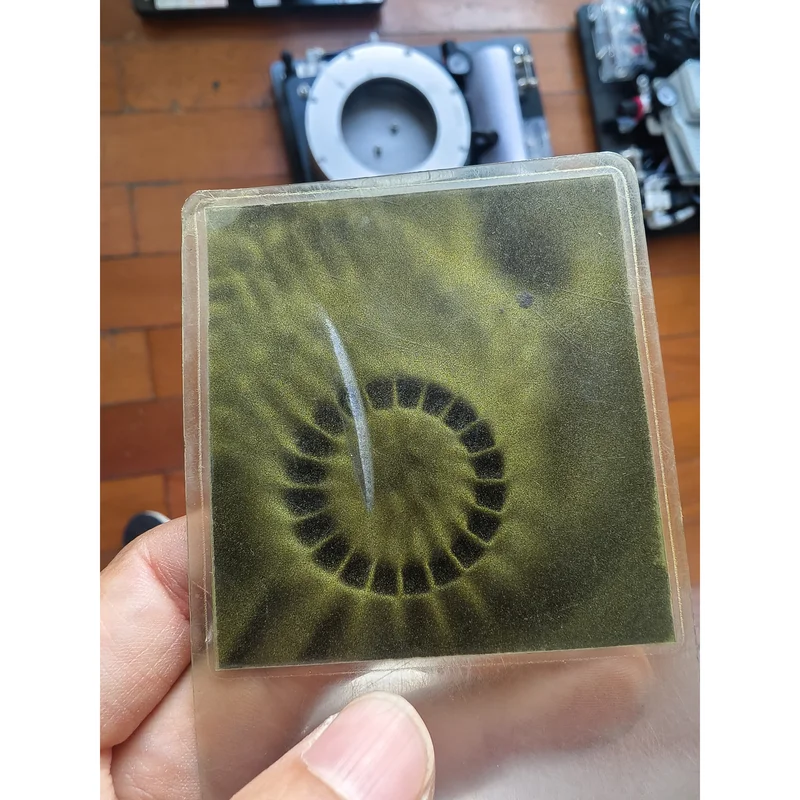
Confirming the result afterwards is normally part of the process, using a measuring instrument to check that the pattern in the finished component matches the one that was specified.
What This Fixture Does
- Writes a defined sequence of alternating poles around a ring or across a face in a single discharge
- Sets the pole count, the pole pitch and the position of every pole boundary
- Distributes the pulse evenly across the pole structure so the pattern stays consistent
- Holds the component in a fixed angular and axial position so the pattern lands identically every cycle
- Supports the pole pattern that the finished component is checked against after magnetizing
Multipole Magnetic Field Inspection & Verification
Design Considerations
- Tooling geometry — the spacing and grouping of the pole structure set the pole count and the pitch, so the fixture is built directly from the required pattern.
- Insulation — the conductors and their leads need insulation between neighbouring poles and from the fixture body.
- Location and repeatability — angular indexing and a positive axial stop keep the pattern in the same place on every component.
- Heat removal — many poles working at once means the winding heats up quickly, so cooling is designed into the assembly.
- Durability — the pole structure and its locating features are made to hold their position over long production runs.
Compatible Equipment
A magnetizing fixture or coil is one part of a complete setup, so it is specified together with the equipment that supplies the pulse, removes the heat and confirms the result.
Related Fixture Types
Other fixture arrangements built for different component geometries and pole patterns:
Request a Multipole Magnetizing Fixture
Describe the pole pattern, the pole count and the component it has to be written into. Our engineers will propose a fixture design and a quotation.
Ready to discuss your magnetizing requirement?
Send us your component drawing, pole pattern and target magnetization. Our engineering team will reply with a configuration proposal and a quotation.
REQUEST A QUOTE
Get a quotation for Multipole Magnetizing Fixtures
Tell us about your component, magnet material and production target. Our engineers review the requirement and reply with technical feasibility and a quotation.
- Reviewed by our own engineers, not a sales desk
- Send drawings, samples or a reference part
- No obligation — we quote only what fits your process
Prefer to talk it through? WhatsApp +86 188 6892 9496
Frequently asked questions
How is a magnetizing fixture designed?
From the pole pattern backwards: pole pitch sets the pole pieces, the part envelope sets the cavity, and the field depth you need sets conductor section and cooling.
Can one fixture cover several part numbers?
Where a family shares pole pattern and diameter, a common cavity with interchangeable inserts usually works. A different pole count almost always needs separate tooling.
What limits fixture life?
Arcing at the pole tips, insulation breakdown, and wear at the locating faces. All three track cycle count rather than calendar age.
How do we start?
Send the drawing with the pole pattern marked, the material grade, and the cycle time the line has to hold.