Custom Magnetizing Coils and Fixtures
In impulse magnetizing, the magnetizing coil and the fixture decide what the pulse does to the component. The coil shapes and delivers the discharge; the fixture sets where the poles land. When a component does not match an existing fixture, a custom magnetizing coil and a purpose-built fixture are what make the process work. JHHS MAG designs and winds both, around the part you actually need to magnetize.
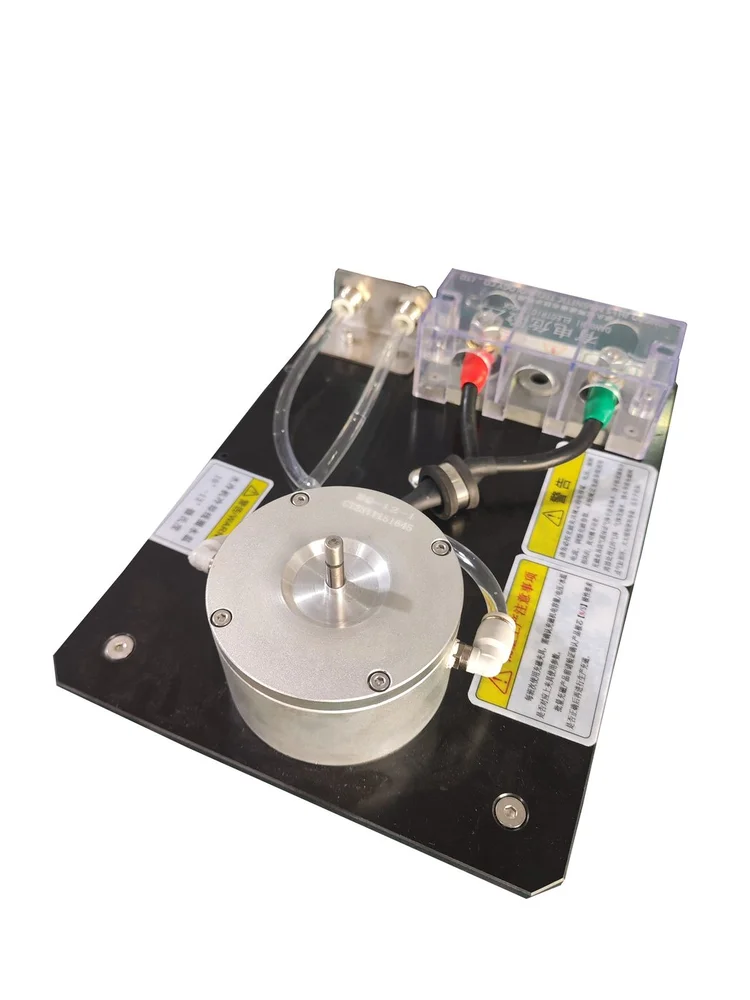
Coils and Fixtures Built Around Your Part
A custom magnetizing coil is wound for the component it will serve. Consequently the starting point is not a catalogue number but your part:
- Its dimensions and the space the coil must fit into
- The material and the magnetic volume that has to be magnetized
- The pole pattern, and whether poles run across a face or around a ring
- How the component is loaded and located in the fixture
- How many cycles the coil will run, and therefore how it is cooled
We design the coil and the fixture together, because their dimensions constrain each other.
Key Capabilities
- Magnetizing coils designed and wound in-house, around the component rather than a catalogue number
- Coil and fixture designed together, because their dimensions constrain each other
- Flat, radial and multipole fixture types built to the pole pattern
- Water cooling specified from the start where the coil runs continuously
- Prototype validation before the coil and fixture go into series production
Types of Magnetizing Coils
- Air-core coils — for components that fit inside a winding
- Water-cooled magnetizing coils — for production lines running continuously, where heat has to be taken out of the winding
- Coils built around an iron core or pole pieces — where the pulse has to be concentrated into a specific area of the component
The choice follows the component and the duty, not a preference. Where the coil runs continuously, water cooling is normally part of the specification from the start.
Flat, Radial and Multipole Fixtures
Fixtures are built in the arrangement that matches the pole pattern:
- Flat multipole magnetizing fixtures — poles written across a flat face, for arc segments and planar assemblies
- Radial magnetizing fixtures — poles arranged around a ring or cylinder, in inner or outer arrangements
- Radial ring N/S fixtures — north and south poles on opposite faces, used for speaker magnets and rotor rings
- Multipole fixtures — a defined sequence of poles for rotors, sensor magnets and encoder magnets
Related equipment: multipole impulse magnetizers, for the machines these fixtures run on.
Typical Applications
- Motor rotors — fixtures built for a defined multipole pattern
- Speaker magnets — radial ring N/S fixtures for loudspeaker drivers
- Sensor and encoder magnets — precision pole patterns for magnetic sensing
- Ring, arc and block magnets — coils and fixtures used before assembly into a device
Fixture Types
Custom fixtures and coils are built in the arrangement that suits the component and the pole pattern it has to carry:
- Radial magnetizing fixtures — poles written around a bore or an outer diameter, for ring and cylindrical parts.
- Axial magnetizing fixtures — the pulse applied along the axis, for flat and disc-shaped parts.
- Multipole magnetizing fixtures — a defined sequence of poles written into the part in one discharge.
- Water-cooled solenoid coils — a cooled winding for magnetizing stations that run continuously.
What We Need From You
To quote a custom magnetizing coil or fixture we need:
- A component drawing, or a physical sample
- Pole pattern and pole count
- Magnetizing direction — radial, axial or multipole
- Target flux level for the finished component
- Production cycle time, and how the part will be loaded and unloaded
Send these and our engineers will propose the coil and fixture design together with a quotation.
Design Validation Before Production
A fixture that has not been validated is a risk to the whole production run, so validation comes before series production:
- Share your requirements — drawings, pole pattern, target flux and cycle time
- Engineering review and quote — coil design, fixture structure and magnetizing configuration
- Prototype and validation — the prototype is built and checked against your target
- Production and support — the coil and fixture go into series production, with technical support afterwards
The validation step is the one that matters most: it is where the pole pattern and the magnetizing setup are confirmed against the component.
Related Equipment
A custom coil or fixture is normally delivered as part of a magnetizing system, so the equipment around it is specified at the same time:
- Multipole impulse magnetizers — for the machines these fixtures run on.
- 3000V medium-to-high capacity impulse magnetizers — where larger components need more magnetizing work per discharge.
- Ultra-high-energy impulse magnetizers — for components that rule out a lower level in the range.
- Industrial water chillers — coil cooling where the coil runs continuously.
- Radial magnetizing fixtures — the pulse applied through a winding that surrounds the part.
- Axial magnetizing fixtures — the pulse applied along the axis, so the poles land on the flat faces.
- Multipole magnetizing fixtures — a defined sequence of poles written into the part in one discharge.
- Water-cooled solenoid coils — solenoid windings with their own cooling circuit.
Specifications
Coil and fixture dimensions, winding and cooling depend on your component, the pole pattern and the production duty.
Specifications vary by configuration — request the datasheet.
Related Product Categories
The magnetizing machines these coils and fixtures are specified with.
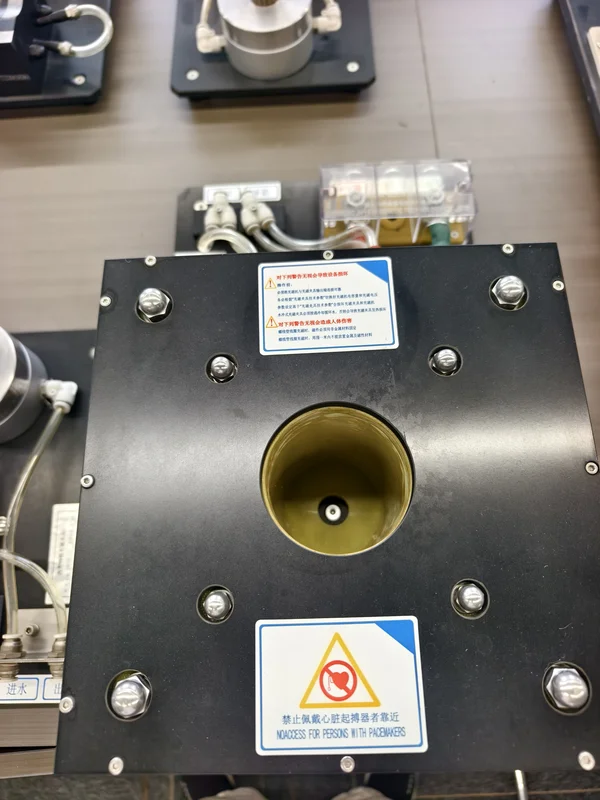
1500V / 2500V / 3000V Multipole Impulse Magnetizers
Multipole magnetization of flat and radial pole patterns in one discharge.
→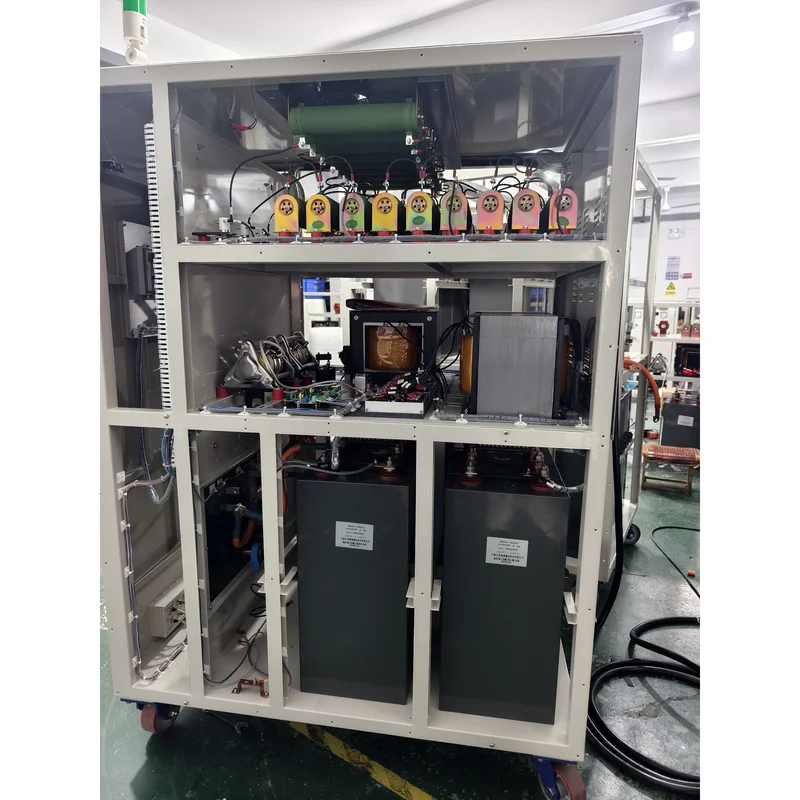
3000V Medium-to-High Capacity Impulse Magnetizers
Specified by magnetizing capacity for larger components and higher duty.
→
3500V / 4000V / 6000V Ultra-High-Energy Impulse Magnetizers
For magnetizing work that needs more energy per discharge.
→Frequently Asked Questions
Common questions from manufacturers planning a custom magnetizing coil or fixture project.
Can you manufacture a magnetizing fixture for an existing machine?
Compatibility must be reviewed based on the machine’s electrical specifications, discharge characteristics, connection method and required fixture design.
What is the difference between a magnetizing coil and a magnetizing machine?
The machine provides the magnetizing energy, while the coil or fixture is designed to produce the magnetic field arrangement required for a particular component.
Do you support multipole magnetizing applications?
JHHS MAG offers magnetizing equipment and customized tooling for suitable multipole applications. Specific feasibility must be confirmed using the customer’s technical requirements.
How should I specify the required magnetization pattern?
Provide a drawing showing the north and south pole locations, pole count, magnetization direction, and working surface. For rings, identify whether the required pattern is on the inner circumference, outer circumference, or axial face. “Multipole” describes the pole arrangement; it does not, by itself, specify the magnetization direction.
Can one magnetizing fixture be used for different components?
A shared fixture may be suitable for closely related components, but compatibility must be checked. Changes in dimensions, magnet grade, pole pattern, or positioning can affect the result. Provide drawings for every intended variant so that shared tooling, interchangeable inserts, or separate fixtures can be evaluated.
When is water cooling needed for a magnetizing fixture?
Cooling requirements depend on the heat generated per pulse, repetition rate, winding design, and operating environment. For production applications, specify the required cycle time and operating schedule. Cooling should be assessed at the intended production duty, rather than selected only by component size.
Start a Custom Coil or Fixture Project
Custom coils and fixtures are built to order. There is no minimum order quantity, and no requirement that your component matches an existing design.
Ready to discuss your magnetizing requirement?
Send us your component drawing, pole pattern and target magnetization. Our engineering team will reply with a configuration proposal and a quotation.
REQUEST A QUOTE
Get a quotation for Custom Magnetizing Coils and Fixtures
Tell us about your component, magnet material and production target. Our engineers review the requirement and reply with technical feasibility and a quotation.
- Reviewed by our own engineers, not a sales desk
- Send drawings, samples or a reference part
- No obligation — we quote only what fits your process
Prefer to talk it through? WhatsApp +86 188 6892 9496
Frequently asked questions
How is a magnetizing fixture designed?
From the pole pattern backwards: pole pitch sets the pole pieces, the part envelope sets the cavity, and the field depth you need sets conductor section and cooling.
Can one fixture cover several part numbers?
Where a family shares pole pattern and diameter, a common cavity with interchangeable inserts usually works. A different pole count almost always needs separate tooling.
What limits fixture life?
Arcing at the pole tips, insulation breakdown, and wear at the locating faces. All three track cycle count rather than calendar age.
How do we start?
Send the drawing with the pole pattern marked, the material grade, and the cycle time the line has to hold.